

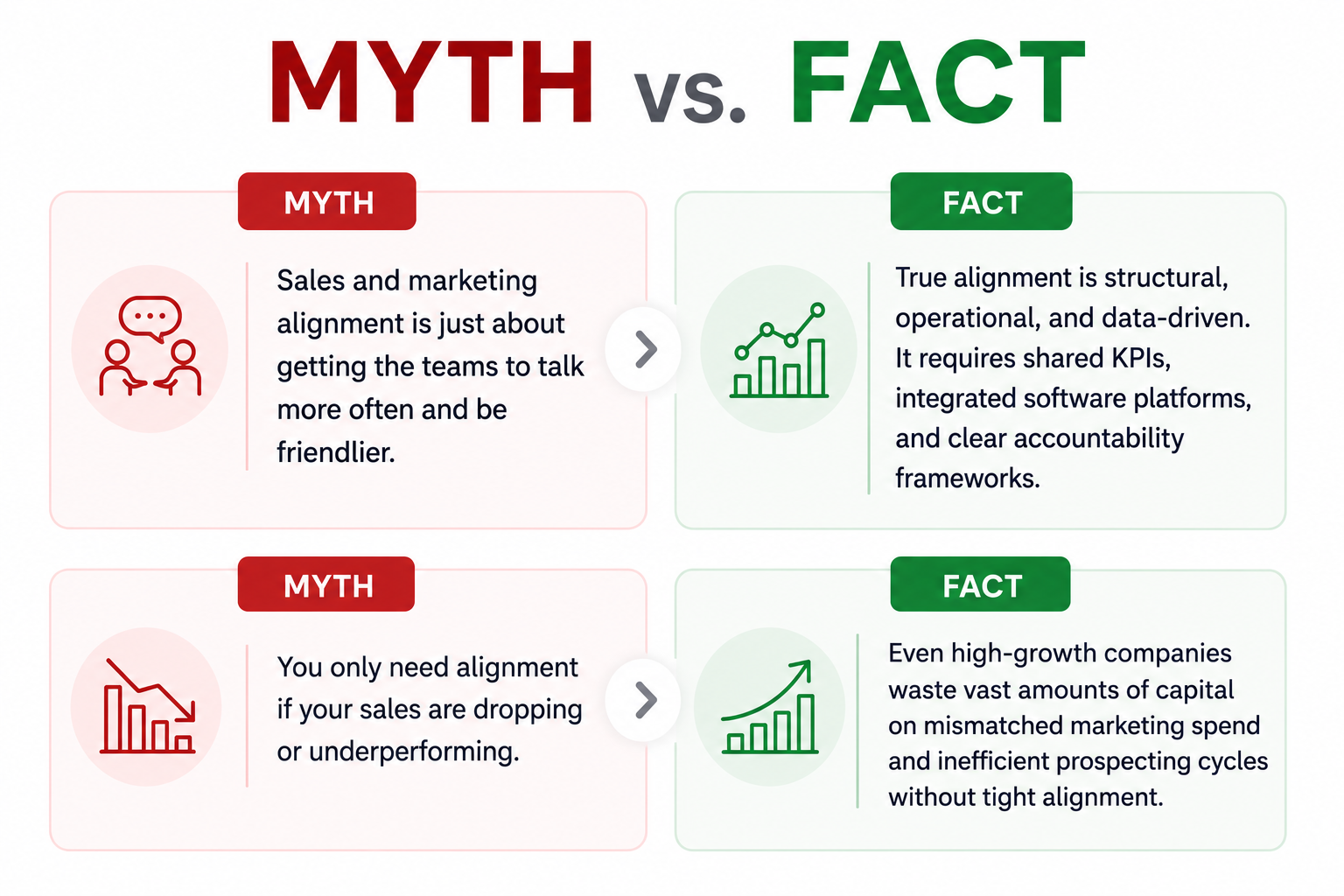
The classic divide between sales and marketing is costing your business money. When marketing focuses solely on raw lead volume and sales complain about lead quality, pipeline velocity stalls. In the modern B2B landscape, commercial success belongs to companies that tear down these silos and build a unified growth engine.
By shifting toward an integrated Revenue Operations (RevOps) approach, your commercial teams stop working in isolation and start operating as a synchronized unit. Let's explore exactly how to establish this alignment, optimize your data infrastructure, and use real-time sales intelligence to accelerate your revenue generation.

1. Win Bigger Revenue with a Unified Smarketing Strategy Framework
The High-Conversion Blueprint: Designing a Joint Smarketing Strategy
To optimize sales and marketing alignment, you must establish shared revenue goals and unambiguous definitions for every stage of your pipeline. Instead of measuring marketing on clicks and sales on closed deals, both teams should be incentivized by a unified smarketing strategy anchored to shared metrics such as pipeline velocity, customer acquisition cost (CAC), and total revenue generated.
The Framework for True Sales and Marketing Alignment
Achieving predictable growth requires moving past traditional "smarketing" strategies and unifying your teams around a single source of truth: shared intent data.
To bridge the gap, companies are shifting toward holistic B2B revenue operations. Instead of waiting for a prospect to fill out a form, teams use website visitor identification software to reveal high-intent accounts early in their buying journey.
Breaking Down the Barriers: The Mechanics of Pipeline Calibration
Historically, marketing focused on chasing Marketing Qualified Leads (MQLs) based on superficial actions, like downloading an eBook. The trouble was that sales would usually look at those leads and toss them out as cold or irrelevant.
Real alignment changes the game by grounding the buyer’s journey in objective, data driven criteria. Instead of a messy handoff, both teams establish a clear mutual agreement. They define what an ideal customer actually looks like and agree on the exact moment a prospect is ready for a real sales conversation.
From Inefficient to Infallible: Real-World Smarketing Success
A B2B cybersecurity provider shifts its definition of a Sales Qualified Lead (SQL) from "anyone who fills out a contact form" to "an IT Director at a company with over 50 employees who has viewed the pricing page twice and matches our target sector."
B2B Landmines: The Misalignment Mistakes that Stall Pipeline Growth
- Allowing marketing to claim success based on "vanity metrics" (likes, impressions, low-intent downloads) while sales misses quarterly revenue targets.
- Failing to document and sign off on exact lead definitions, leading to subjective finger-pointing during pipeline reviews.
Smart Selection: Strategic Investment Advice for Alignment Tools
Look for platforms that integrate your lead generation data natively with your CRM. Software that bridges marketing activity with sales outcomes ensures everyone looks at the same source of truth.
Growth Catalyst: Deploying Advanced Materials for Commercial Teams
Discover how modern content maps directly to buyer needs by checking out our deep dive on the sales enablement content every team needs.
External Insights: Authoritative Proof and Global Pipeline Benchmarks
According to Harvard Business Review’s analysis on ending the war between sales and marketing, organizations that establish tightly integrated commercial operations experience up to a 32% increase in year-over-year revenue growth and retain 36% more customers.
Core Takeaway: The Bottom Line on Operational Cohesion
Without shared metrics, alignment is just a concept. Lock down your definitions, anchor your teams to shared revenue targets, and create a formal SLA to bridge the operational gap.
2. Capture Early Market Intent Using Modern Intent Data Tools
The Power of Intent Data: Maximizing Revenue via Website Visitor Identification
Modern alignment relies heavily on capturing hidden digital intent data to bridge the gap between marketing interest and sales action. By deploying automated intent data tools alongside robust website visitor identification software, your marketing team can unearth the exact B2B accounts browsing your site anonymously, passing this high-value, real-time intelligence straight to sales for immediate outbound execution.
Unmasking the Invisible Buyer: Shifting from Forms to Account Insights
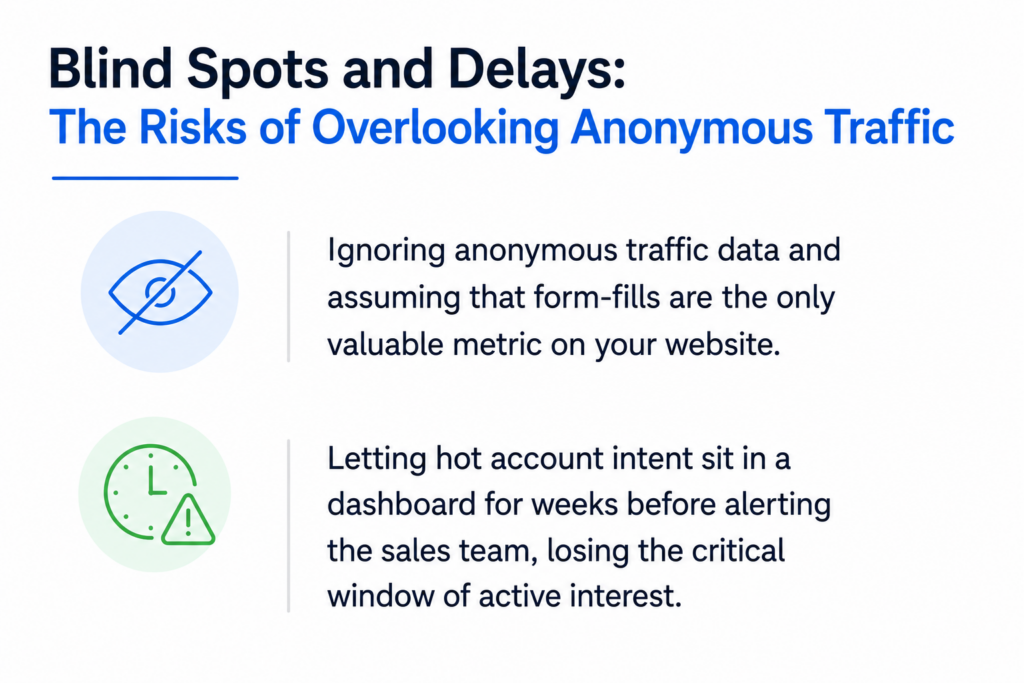
Up to 98% of your website visitors leave without filling out a form. They are researching solutions, comparing your features, and evaluating your authority in complete anonymity. Marketing budgets pull these prospects in, but because they do not convert on a traditional lead form, sales never hears about them. Website visitor tracking removes this blind spot. It matches anonymous IP addresses to corporate entities, showing sales which target accounts are highly engaged right now.
Closing Dark Funnel Leads: Turning Secret Intent into Closed Capital
An IT managed service provider (MSP) notices that a top-tier manufacturing firm has spent fifteen minutes looking over their cloud migration service pages. No form was submitted. Because they use intent tracking, the sales team immediately identifies the company's head of infrastructure on LinkedIn and reaches out with a tailored case study, closing a discovery call within 48 hours.
Choosing Your Engine: Key Features to Vet in an Intent Platform
When choosing an account identification tool, ensure it offers real-time notifications and filters out residential ISPs, so your sales team only spends time tracking genuine corporate entities.
Tracking the Journey: Enhancing Revenue Attribution across Touchpoints
To visualize exactly how target accounts interact with your commercial digital footprint, master your pipeline metrics using our blueprint on buyer journey analytics and touchpoint measurement.
Authoritative Data from the Frontier of B2B Procurement
The data ecosystem from 6sense B2B intent benchmarks reveals that buying groups are already 70% of the way through their purchasing journey before they fill out their first form. Proactive website tracking is essential for sales teams to engage prospects during this hidden evaluation window.
Seizing In-Market Evaluation Windows
Stop waiting for prospects to ask for a demo. Use real-time visitor intelligence to catch in-market accounts while they are actively thinking about your solution.
3. Scale Revenue Predictability with Integrated B2B Revenue Operations
The RevOps Infrastructure: Synchronizing Growth with Advanced Tools
An integrated framework for B2B revenue operations (RevOps) serves as a structured process where sales provides direct, system-level feedback to marketing regarding lead quality and conversation outcomes. By deploying advanced B2B lead generation software, this feedback mechanism allows marketing to continuously optimize campaigns for high-revenue conversions rather than raw traffic volume, keeping both teams pulling in the same direction.
Engineering the Feedback Loop: Maximizing CRM and Data Integrity
Alignment breaks down when communication is irregular or informal. A RevOps infrastructure embeds feedback right into your operational routine. When sales updates a status in the CRM (e.g., marking a lead as "Disqualified - Poor Fit"), marketing analyzes that specific data point to tweak their ad targeting, keyword selection, or content strategy. This turns data into an ongoing feedback loop that refines your go-to-market strategy automatically.
Agile Optimization: Adapting Ad Budgets to Live Sales Feedback
A marketing agency notices that a specific paid ad campaign is driving hundreds of leads, but the sales team marks 80% of them as "budget under threshold." Marketing immediately pauses that campaign asset and shifts budget toward enterprise-focused search terms instead.
Structural Breakdowns: Systemic Flaws that Kill Commercial Operations
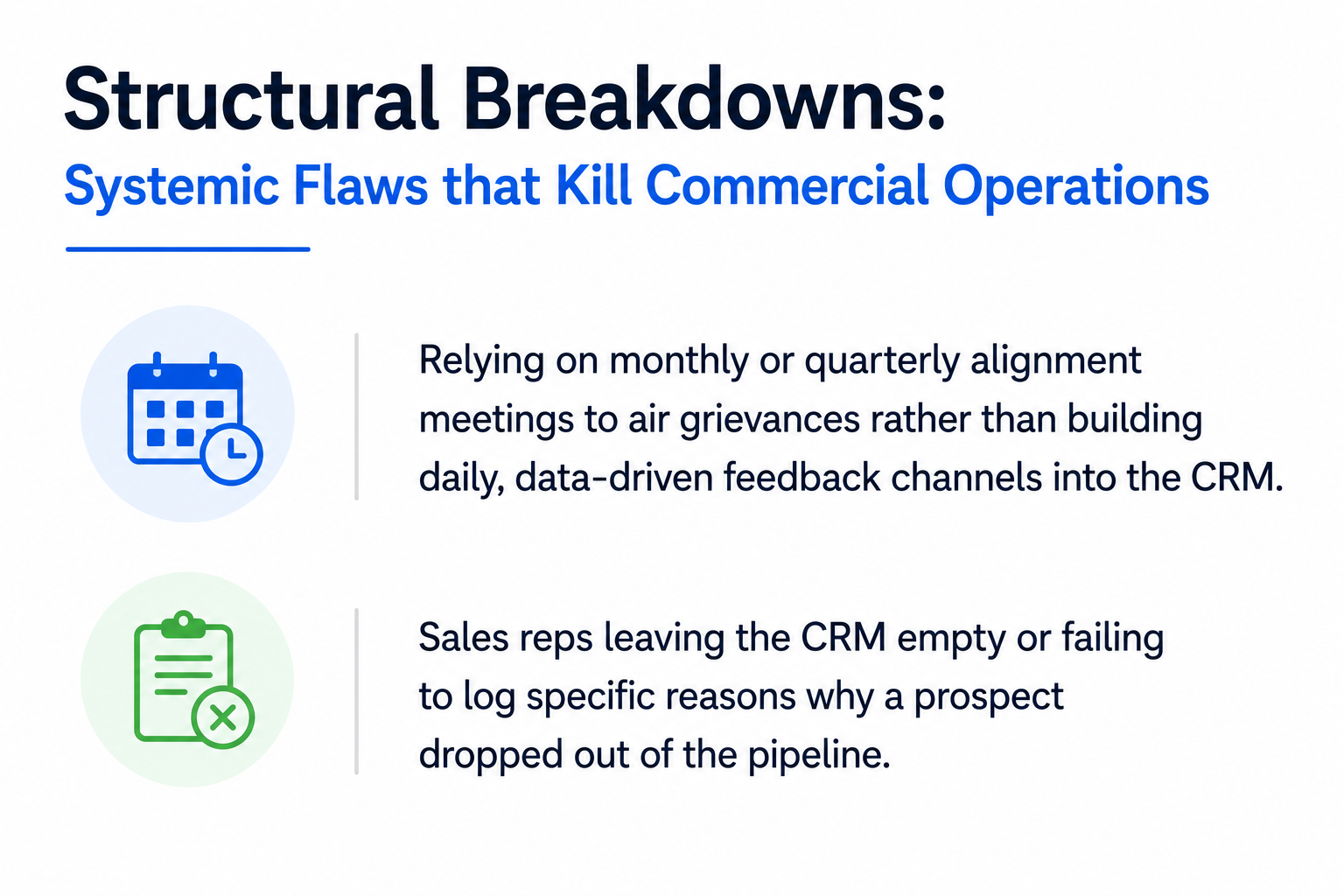
- Relying on monthly or quarterly alignment meetings to air grievances rather than building daily, data-driven feedback channels into the CRM.
- Sales reps leaving the CRM empty or failing to log specific reasons why a prospect dropped out of the pipeline.
Procurement Criteria: Selecting Software for Interoperability and Scale
Select tools that sync seamlessly with your central CRM database, ensuring that data logged by sales automatically influences the insights and reports reviewed by your marketing analysts.
Deciphering the Committee: Influencing Multi-Stakeholder Deals
To understand how integrated operations align directly with the cognitive patterns of modern buying committees, read our guide on understanding B2B purchase decisions.
Architectural Frameworks from Global Advisory Leaders
Enterprise framework analysis from Gartner Revenue Operations models highlights that continuous loop data validation cuts down wasted marketing spend by up to 25% within the first year of deployment while drastically reducing customer acquisition costs.
Continuous Loop Optimization
Keep your communication data-driven and regular. When sales updates the CRM meticulously, marketing gains the precise insights needed to generate better opportunities.
Operational Alignment Tools & Checklists
Buying Checklist for Alignment Software
- Does the software offer real-time corporate deanonymization for website traffic?
- Can it push firmographic data directly into your existing CRM platform?
- Does it include filter options to remove unwanted ISP traffic and bot activity?
- Can you set up instant alerts for your sales development reps when target accounts land on key pages?
- Does it support transparent reporting so both teams can audit pipeline sources together?
FAQ
What is the fastest way to align sales and marketing teams?
The fastest approach is to tie both departments to a single revenue target and run a shared weekly pipeline meeting to audit lead flow, definition accuracy, and immediate outbound opportunities.
How does visitor identification software support sales alignment?
It unmasks anonymous company traffic on your website, providing marketing with immediate validation on who their campaigns are attracting, while handing sales hot, in-market target accounts to prospect instantly.
What should be included in a sales-marketing SLA?
An SLA should clearly detail your Ideal Customer Profile (ICP), explicit lead score thresholds, maximum lead response times for sales, and a definitive feedback process for lead disqualification.
Why do traditional MQL models often fail?
Traditional MQL models reward marketing for superficial engagements like newsletter signups, which frequently fail to indicate genuine buying intent or budget capacity for sales conversations.
How often should sales and marketing review pipeline data?
Tactical lead routing and intent data should be reviewed daily or via automated alerts, while broader strategic KPI and SLA performance should be audited weekly.
Driving Growth Through Seamless Sales and Marketing Alignment
True commercial alignment turns your sales and marketing teams into a single, high-velocity growth engine. By aligning definitions, linking data tools, and leveraging website intent data, you eliminate friction and ensure your sales team spends time exclusively with prospects who are actively in-market.
Ready to bridge the data gap and see exactly which businesses are browsing your website right now? Head over to Dynamic Leads to book a live demo and start turning your anonymous traffic into actionable sales pipeline today.