
With the rise of ai sales enablement, the B2B sales environment has officially reached an inflection point. Today's sellers no longer struggle with a lack of resources; instead, they are drowning in complex software stacks and fragmented customer databases. The average sales representative now balances eight different platforms to close a single deal, and 42% of reps feel actively overwhelmed by the sheer volume of their tools.
This friction directly stalls deals and dilutes revenue growth. However, artificial intelligence is rewriting the rules of engagement. AI is shifting sales enablement away from old-school, static content repositories and turning it into a proactive engine of Revenue Orchestration.
By turning passive content databases into autonomous, intent-driven assets, commercial teams can automate administrative tasks, identify high-intent accounts early, and focus entirely on human-to-human relationships. Let’s explore how this transformation works and how your GTM (Go-To-Market) team can capture this competitive edge. For a deeper understanding of these concepts, refer to our comprehensive B2b Sales Enablement Guide.
1. Shifting Sales Technology Trends: How Agentic AI Execution is Replacing Static Content Libraries
For years, traditional enablement meant dumping PDFs, slide decks, and battlecards into an intranet portal and hoping the sales team could locate them under pressure. This approach failed because reps spent hours searching for materials that were often outdated or irrelevant.
According to research from Forrester on B2B marketing and sales tech, 2026 demands a shift from tech hype to operational discipline where AI agents trade experimentation for measurable, trusted business value. Designing and mapping out the right Sales Enablement Content Every Team Needs ensures that your automated systems always have high-impact assets to pull from.
With modern sales technology trends, AI has stepped in to handle this cognitive load. AI agents read call transcripts, detect buyer concerns (such as competitor mentions or budget constraints), and immediately serve up the perfect case study or pricing comparison directly to the rep's screen.
The Shift to Autonomous Agents
Rather than waiting for a rep to ask a question, specialist AI agents now work behind the scenes. For example:
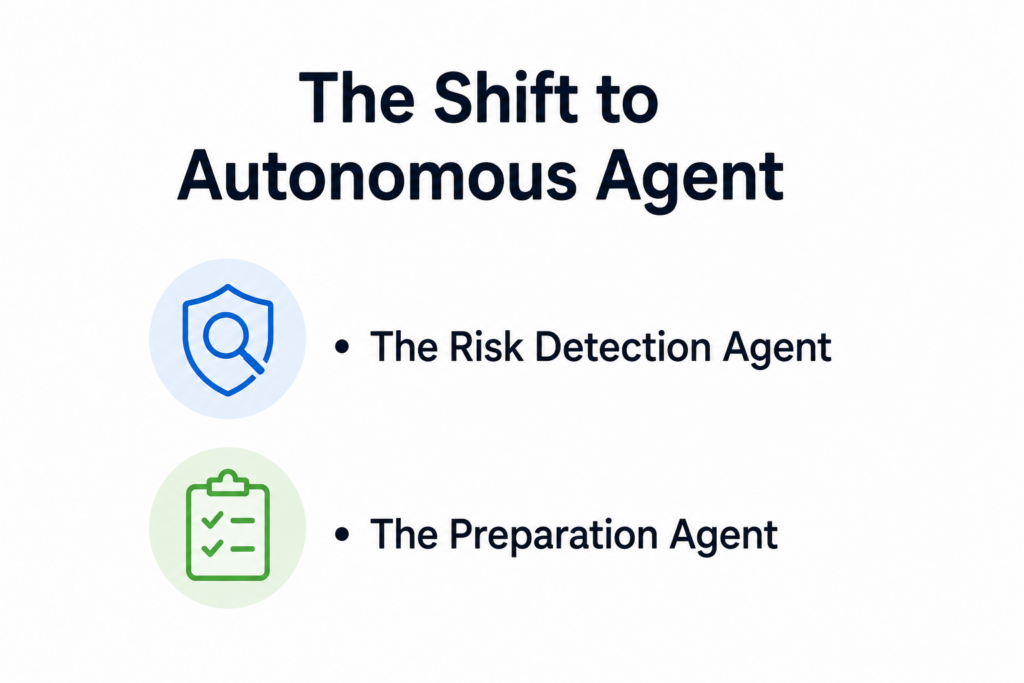
- The Risk Detection Agent: Monitors email response times and flags when a deal is stalling.
- The Preparation Agent: Gathers recent financial reports, organizational shifts, and executive interviews to brief a rep within seconds before a discovery call.
Revenue Orchestration
Revenue Orchestration is the practice of unifying sales strategy, content, buyer signals, and AI workflows into a single synchronized framework to drive highly contextual and consistent GTM execution.
Agentic AI & Revenue Orchestration: Common Pitfalls & Buying Advice
- The Mistake: Relying on basic generative AI prompts that write generic, robotic sales pitches. This damages your brand equity and plummets response rates.
- Buying Advice: Seek out platforms that offer an Agent Control Plane. This feature lets you enforce brand guidelines and security guardrails, ensuring that while the AI drafts proposals, a human always acts as the final strategic gatekeeper.
2. Leveraging Real-Time Intent and Visitor Identification
AI changes sales prospecting by swapping reactive cold-calling for real-time buyer intent tracking. By integrating advanced visitor identification software, B2B sales teams can unmask anonymous website traffic, map digital behaviors to target corporate entities, and engage warm prospects exactly when their buying intent peaks.
Unmasking Dark Funnel Web Traffic with a Visitor Identification Tool
Traditional prospecting is highly inefficient. Reps burn hours chasing contacts who are not ready to buy. Meanwhile, high-value accounts are likely visiting your website right now, reading your documentation, and leaving without filling out a form. Data gathered in 6sense's research on B2B intent data reveals that B2B buyers complete roughly 70% of their purchase journey anonymously online before ever directly contacting a vendor.
By running B2B visitor identification through a platform like Dynamic Leads, you bring visibility to this dark funnel. A high-performing visitor identification tool cross-references anonymous IP visits with detailed B2B firmographic databases, revealing:
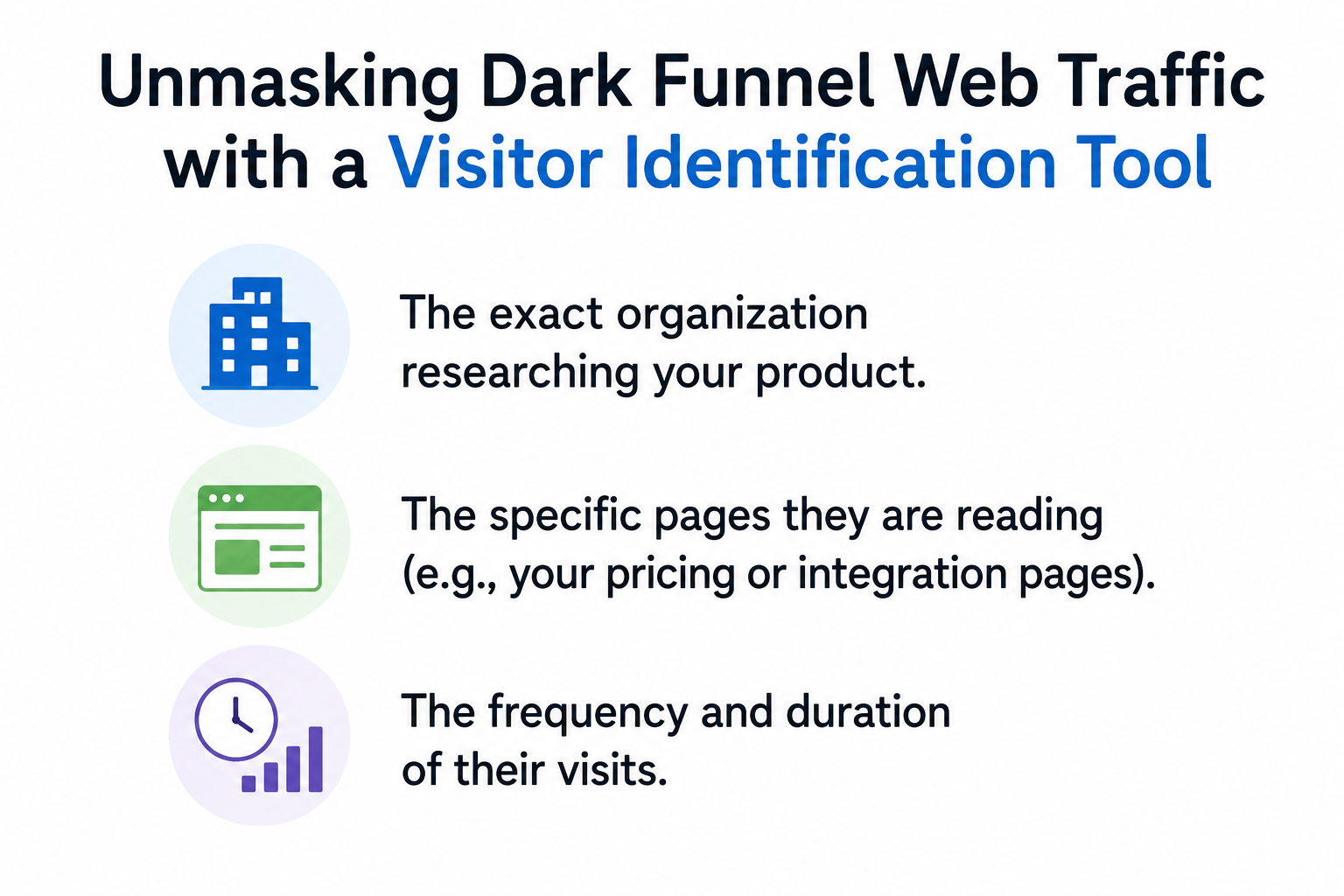
- The exact organization researching your product.
- The specific pages they are reading (e.g., your pricing or integration pages).
- The frequency and duration of their visits.
The Power of Signal-Rich Intelligence
When you combine visitor tracking with sales enablement, your team gains access to signal-rich intelligence. Instead of sending cold, generalized outbound sequences, reps can reach out to warm, active targets with highly personalized messaging based on what those targets are actively reading.
Choosing a Visitor Identification Tool: Implementation Pitfalls & Buying Advice
- The Mistake: Bombarding a company with generic cold emails the minute their IP address registers on your site. This feels intrusive and unprofessional.
- Buying Advice: Use visitor identification data to guide your sales context. If a target firm is reading a deep-dive integration guide, have your rep send a highly tailored checklist focused on that specific technical integration.
3. Contextual AI Coaching and Simulated Selling
AI is redefining sales training by shifting the industry from static, theoretical courses to real-time, simulated selling. Using intelligent conversational AI, reps can run realistic mock negotiations against simulated buying personas who present realistic objections, letting them refine their strategy safely before speaking to a real client.
Why Traditional Training Fails
Most sales onboarding relies on front-loaded courses, dense playbooks, and checkbox quizzes. This training format struggles because human beings quickly forget theoretical information when they don’t apply it immediately.
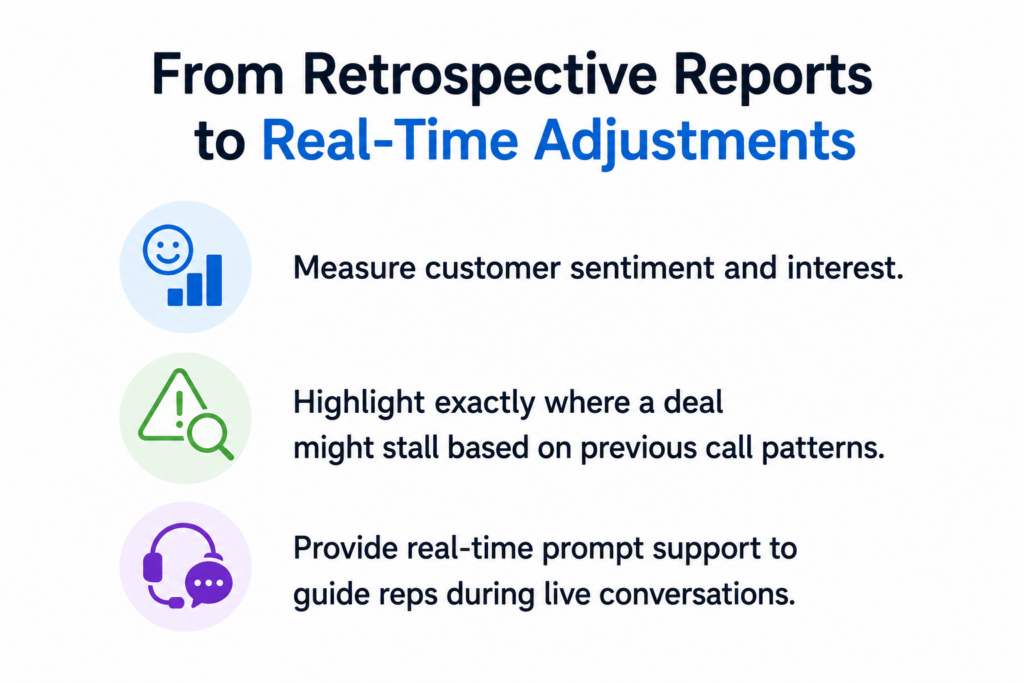
From Retrospective Reports to Real-Time Adjustments
In addition to roleplay, conversation intelligence and sales intelligence software record, transcribe, and analyze live sales calls. Gartner research on sales performance in the AI era predicts that AI-driven enablement functions will achieve 40% faster sales stage velocity than traditional methods by 2029.
To make this successful, cross-department coordination is critical; teams that collaborate closely on their shared GTM content are significantly more likely to experience faster market expansion. Learn how to bridge this gap in our guide on Sales and Marketing Alignment.
Evaluating Sales Intelligence Software: Onboarding Mistakes & Buying Advice
- The Mistake: Using basic AI coaching platforms that only evaluate surface-level metrics like speaking speed or positive tone.
- Buying Advice: Choose coaching tools that measure real behavior against structured sales methodologies (such as MEDDPICC) to ensure your team's practice runs translate into real-world revenue.
4. Cleaning the Data Pipeline for AI Precision
AI changes enablement operations by proving that output quality depends directly on data hygiene. Because modern AI models require reliable datasets to make accurate predictions, modern sales organizations are automating data hygiene to clean up CRM records and eliminate bad inputs.
The "Garbage In, Garbage Out" Challenge
Artificial intelligence can dramatically speed up proposal writing and lead scoring, but it cannot fix broken data. If your database is loaded with stale email addresses, duplicate records, and incomplete company profiles, your AI will produce poor outreach copy and incorrect forecasts.
The Comprehensive Data Pipeline
Step 1: Real-Time Intent: Capture Real-Time Web Visitor Footprints
The modern visitor identification tool detects anonymous IP addresses and logs digital behavior on your website the moment high-intent accounts land on your high-value pages.
Step 2: Core Identification Engine: Match Firmographics
The Dynamic Leads database cross-references those digital footprints to map anonymous traffic to precise corporate entities, industry verticals, and decision-maker profiles.
Step 3: Automated Data Hygiene: Clean and Populate CRM Fields Automatically
The system automatically cleans records, resolves duplicates, and pushes enriched account intelligence directly to your CRM, ensuring your data is ready for AI processing.
Step 4: AI Execution & Lead Scoring: Power High-Impact AI Proposals & Email Drafts
Clean, signal-rich data feeds straight into your sales intelligence software to run high-impact predictive lead scoring models and automatically draft hyper-personalized outbound sequences.
Automating the Data Entry Chore
Sales reps hate manual CRM entry. Studies show that sellers spend a massive chunk of their week on administration rather than actual selling.
Modern, AI-driven platforms bypass this entirely by handling CRM data capture in the background. By automatically pulling firmographics, updating email strings, and recording call summaries, these tools free up your sellers to do what they do best: talk to prospects and build relationships.
5. B2B GTM Readiness: Buying Checklist
Use this checklist to evaluate whether your current technology stack is prepared for AI-driven sales enablement:
- Unified Revenue Platform: Are your customer database, sales content, and outreach steps integrated into a single hub to prevent silos?
- Active Visitor Identification: Can you deanonymize web traffic and push real-time intent data straight to your outbound team?
- Agent Safety Controls: Do you have clear system boundaries to prevent AI agents from sending unapproved client communication?
- Behavioral Coaching Tools: Does your sales training platform offer interactive AI roleplay based on real-world objections?
- Automated Data Cleaning: Does your software automatically refresh CRM records to maintain high data quality?
AI Sales Enablement: Separating Myths from Facts
- Myth: AI will completely replace human B2B sales professionals.
- Fact: AI replaces administrative chores, not human relationships. Complex B2B enterprise sales still rely heavily on trust, consultation, and strategic alignment, areas where human sellers excel.
- Myth: AI-generated outreach is too generic to work.
- Fact: Generative AI is generic only when it lacks context. When powered by real-time visitor intent data and account-level analytics, AI-drafted messages are incredibly personalized, which can lift cold response rates dramatically.
AI Sales Enablement & Predictive Lead Scoring: Frequently Asked Questions
How does AI shorten B2B sales cycles?
AI shortens sales cycles by identifying high-intent buyers early and eliminating manual administrative bottlenecks. Platforms like Dynamic Leads flag which accounts are actively researching your product, allowing reps to jump in with the right content immediately and bypass slow, cold outreach phases.
What is the role of Agentic AI in B2B selling?
Agentic AI moves from assisting to executing. While traditional tools wait for a human command, agentic systems continuously scan email and CRM channels, autonomously prepare hyper-personalized documents, and queue up strategic action plans for reps to approve.
How does poor data quality impact sales AI?
Sales AI depends entirely on the accuracy of its inputs. If your CRM contains old contacts or inaccurate company profiles, the AI will build flawed proposals and deliver unreliable forecasts. High-quality data is essential for effective sales automation.
What is the value of automated visitor identification?
Automated visitor identification deanonymizes your website traffic to reveal which businesses are researching your solutions. This gives your sales team real-time intent signals, letting them pitch warm accounts while they are actively showing purchase intent.
Why are sales teams moving away from standard training platforms?
Standard, static courses fail to change seller behavior on live deals. AI-powered simulations allow sales reps to practice handling difficult buying objections in a safe, interactive environment, which speeds up onboarding and increases close rates.
Driving Commercial Growth with Sales Intelligence Software & Modern Enablement
The future of sales enablement is active, automated, and deeply contextual. Organizations that continue to rely on siloed tools and manual, cold outreach will find themselves falling behind agile competitors. By shifting your focus to revenue orchestration and bringing visibility to your dark website traffic, you can ensure your team is always in sync with your buyers.
Ready to turn your anonymous website visitors into pipeline opportunities? Book a customized demo with Dynamic Leads today and see how real-time visitor identification can supercharge your sales team.