

The modern B2B buying journey has changed. Forrester research indicates that a staggering 82% of global B2B marketing leaders recognize that buyers demand highly personalized journeys, yet the vast majority of these buyers choose to remain completely anonymous during their initial research phase. They browse your product feature pages, read your case studies, and evaluate your pricing structure without ever filling out a contact form or downloading an ebook.
For most B2B commercial and operational teams, this high-intent traffic remains completely invisible, trapped inside what is known as the "dark funnel". Traditional analytics tools will show you that fifty people visited your pricing page from London, but they cannot tell you which accounts those people work for. This is where software designed to identify anonymous web traffic steps in, transforming hidden actions into clear, actionable account intelligence to fuel your outbound plays.
Demystifying B2B Website Visitor Identification Technology
The Quick Take on B2B Website Visitor Identification
B2B website visitor identification is a technology that unmasks the corporate identities of anonymous website traffic by matching network IP addresses and browser configurations against global firmographic databases. This software reveals the business domain, industry, geographic location, and specific browsing behavior of companies visiting your site, removing the need for a form fill.
Deep Dive into Website Visitor Tracking Software Mechanics
When an anonymous user lands on your website, they leave behind technical identifiers, primarily an IP address. Visitor tracking platforms capture this data point instantly and perform a real-time reverse lookup. Because enterprise networks own distinct IP ranges, the software can accurately pair that numerical sequence with a verified company profile. Gartner Peer Insights on Visitor Identification Software notes that tools built to identify anonymous web traffic have become an essential piece of demand generation tech, allowing businesses to gain immediate insights into account-level behavior.
How Enterprise Brands Identify Anonymous Web Traffic in Real Time
An enterprise cybersecurity provider notices an uptick in anonymous traffic on their specialized compliance product page. The software unmasks that three distinct visitors from a major financial institution in London spent twenty minutes reviewing their technical specifications sheet.
Expecting Individual Profiles over Company Identity
Believing the software can instantly reveal the personal email or mobile phone number of the exact person browsing. The technology uncovers the core B2B intent signals of the organization, not the individual citizen.
Ignoring Intent Signal Content Context
Failing to monitor which specific pages were viewed, leading to generic, irrelevant outbound outreach that ignores what the company was actually researching.
Prioritising Native Integrations
Look for software platforms that provide native integrations with your core CRM platforms. Ensuring that account-based intent data flows directly into your database helps avoid siloed information and manual entry errors.
Aligning B2B Website Visitor Identification with GTM Playbooks
To ensure your commercial teams know exactly what to do with this new influx of data, explore our complete B2b Sales Enablement Guide to map out structured team playbooks.
Industry Authority Evidence
According to 6sense Data on Anonymous Website Visitor Identification, capturing anonymous intent early allows business teams to engage with target accounts long before they ever raise their hand to speak with an internal representative.
Why Website Visitor Tracking Software Matters
By resolving network metrics into firmographic records, tracking software lets you spot active accounts before they convert via forms.
Deploying Website Visitor Tracking Software for Pipeline Growth
Capturing B2B Intent Signal
To make sense of raw website visitor tracking software data, revenue teams must combine account-level intent data with a targeted engagement strategy. Once a high-intent company is identified, go-to-market professionals locate the relevant decision-makers within that corporate structure and launch contextual, multichannel outreach sequences.
Identifying the company is only half the battle. Once you know a target company is actively browsing your site via website visitor tracking software, your marketing and operational teams must react quickly. This involves looking at the specific pages visited to judge the account's pain points. If a company is looking at your integration documentation, they are far along in their evaluation journey. Business development teams can then use platforms like LinkedIn Sales Navigator to map out the likely buying committee at that specific firm and start personalized outreach.
Actioning Real-Time B2B Intent Signals
A marketing agency discovers via their dashboard that a major retail brand has spent two days reading their case studies on digital transformation. The agency's team immediately identifies the Retail Brand’s Head of Marketing, sending over a tailored audit addressing the exact challenges highlighted in those case studies.
Intrusive Outbound Messaging
Opening an email with "I saw you looking at our pricing page at 2:00 PM today." This breaks trust and feels intrusive rather than helpful.
Friction from Delayed Internal Responses
Waiting weeks to action an alert, long after the target company's internal research window and active B2B intent signals have cooled down.
Real-Time Alerts vs Batched Updates
Prioritize platforms that offer real-time notification alerts via Slack or Email so your account representatives can catch warm accounts while interest is high.
Syncing Website Visitor Tracking Software with Your Tech Stack
A successful outbound process relies completely on high-quality collateral. Read our analysis on the Sales Enablement Content Every Team Needs to prepare assets that match your visitor's intent.
Industry Authority Evidence
A comprehensive Forrester Analysis on B2B Personalisation highlights that relevance and immediate responsiveness are the two defining factors in modern B2B pipeline conversion.
Key Takeaways on Capturing High-Value B2B Intent Signals
Data means nothing without execution. Convert your intent signals into active opportunities by executing structured, helpful outreach to the target buying committee.
Actioning Account-Based Intent Data Across Marketing and Operations
Aggregating Account-Based Intent Data
Cross-department alignment ensures that account-based intent data is acted upon uniformly across the organization. By establishing shared definitions for target accounts and agreed-upon timing thresholds, marketing can pass warm intent data over to front-line teams for swift, unified conversion plays.
A pre-set engagement score calculated by combining a visitor’s company fit with their behavioral actions (such as visiting high-value pages multiple times). When met, this automatically triggers account outreach.
The Infrastructure Powering B2B Website Visitor Identification
When account-based intent data sits strictly within marketing dashboards, it rarely translates into real opportunities. True alignment means both departments sit down to define what makes an account "outreach-ready". For example, a single visit to a blog post might not mean much. However, if a company visits three distinct feature pages and a case study within a single week, that account should automatically route to a business development representative for direct attention.
Operational Scenario: Leveraging Website Visitor Tracking Software
A software company sets up an alert system: when any target manufacturing account visits their platform pricing page, an automated task is created in the CRM for the account owner, loaded with relevant messaging templates based on those explicit B2B intent signals.
Departmental Information Siloing
Leaving rich visitor insights locked inside an isolated marketing tool where your customer-facing sales teams cannot view or action them.
Lack of Account Ownership Protocols
Not setting up clear internal guidelines on who owns the commercial relationship once a target account has been de-anonymised by your website visitor tracking software.
Custom List Filtering Capabilities
Ensure the platform you choose allows you to easily filter out existing clients, competitors, and irrelevant industries to keep your target lists clean.
Embedding Account-Based Intent Data into Existing Workflows
To maximize your revenue operations efficiency, dive into our framework on Sales and Marketing Alignment to fix cross-department structural gaps.
Industry Authority Evidence
Gartner reports that platforms linking buyer behavior directly with automated workflows consistently outperform legacy, static lead generation methods across all B2B sectors.
Maximising Your Account-Based Intent Data
Break down structural data walls between teams. Ensure your marketing insights turn into direct business development actions to unlock your dark funnel.
Choosing a Visitor Identification Vendor
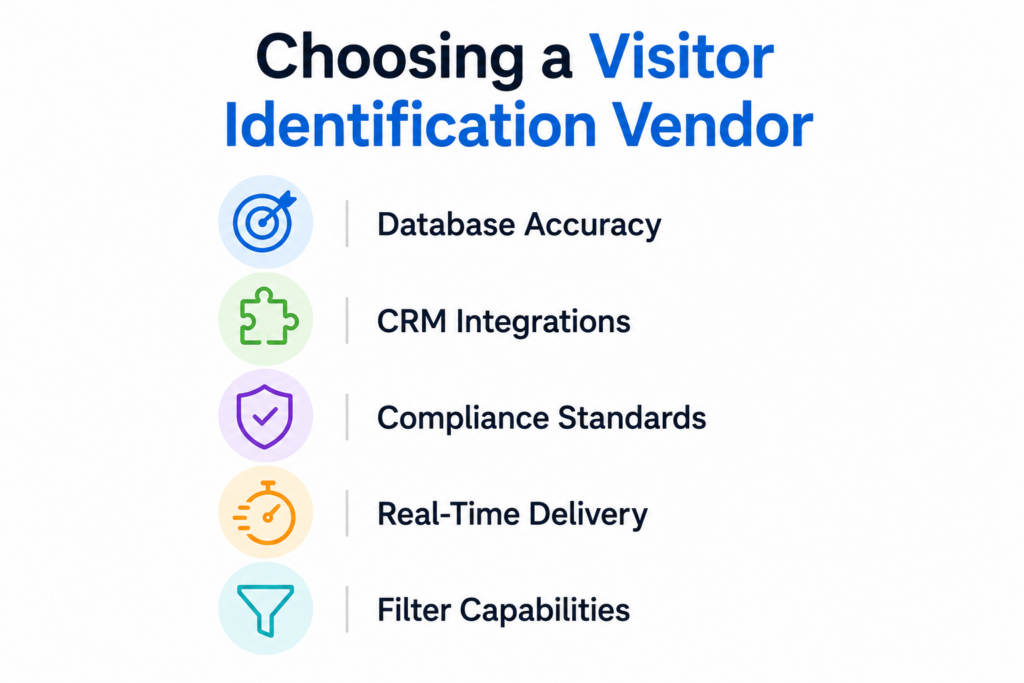
- Database Accuracy: Does the vendor have strong, verified network coverage in your primary target regions (e.g., UK, Europe)?
- CRM Integrations: Can it seamlessly push account activity directly into platforms like HubSpot or Salesforce?
- Compliance Standards: Is the tool fully compliant with UK GDPR regulations regarding B2B corporate tracking?
- Real-Time Delivery: Does the system provide immediate intent alerts, or does it rely on delayed weekly reports?
- Filter Capabilities: Can you filter out ISPs (Internet Service Providers), competitors, and current customers?
FAQ
Is B2B website visitor identification compliant with UK GDPR?
Yes. B2B visitor tracking focuses purely on corporate entities and public network IP data rather than tracking private individuals. This falls under the "Legitimate Interest" clause of the UK GDPR framework, provided your company privacy policy clearly states that corporate traffic data is processed for business analytics.
How accurate are reverse IP lookups for remote workers?
Quality visitor identification platforms use advanced cross-referencing models. Instead of relying solely on office networks, they map residential or dynamic connections to corporate domains using secure device configurations and cloud ecosystem histories, ensuring high match rates even for hybrid teams.
Will this software slow down my website load speed?
Modern visitor identification platforms rely on lightweight, asynchronous JavaScript code scripts. These scripts load in the background alongside your web infrastructure, meaning your user experience and core site performance metrics are entirely unaffected.
Can I see the exact individual name of the person browsing?
No. Ethical, compliant enterprise tools identify the specific corporate organization and the exact pages they engaged with. Your team can then match that intent signal to your target buying personas to conduct safe, professional outreach.
How does this differ from standard retargeting advertising?
Retargeting shows generic ads to anonymous users across the web based on cookies. Visitor identification unmasks the actual business name behind that traffic, allowing your representatives to bypass ads entirely and start direct, personalized business conversations.
Mastering Your Strategy: The Future of Website Visitor Tracking Software
Allowing high-intent business traffic to leave your website without capturing their commercial interest is a massive missed operational opportunity. De-anonymising your website traffic lets you uncover hidden demand, focus your outbound efforts on accounts already researching your brand, and accelerate your overall market velocity.
Ready to unmask your dark funnel and see exactly which companies are exploring your solutions right now? Visit Dynamic Leads today to start a free trial or book an introductory demo with our team.