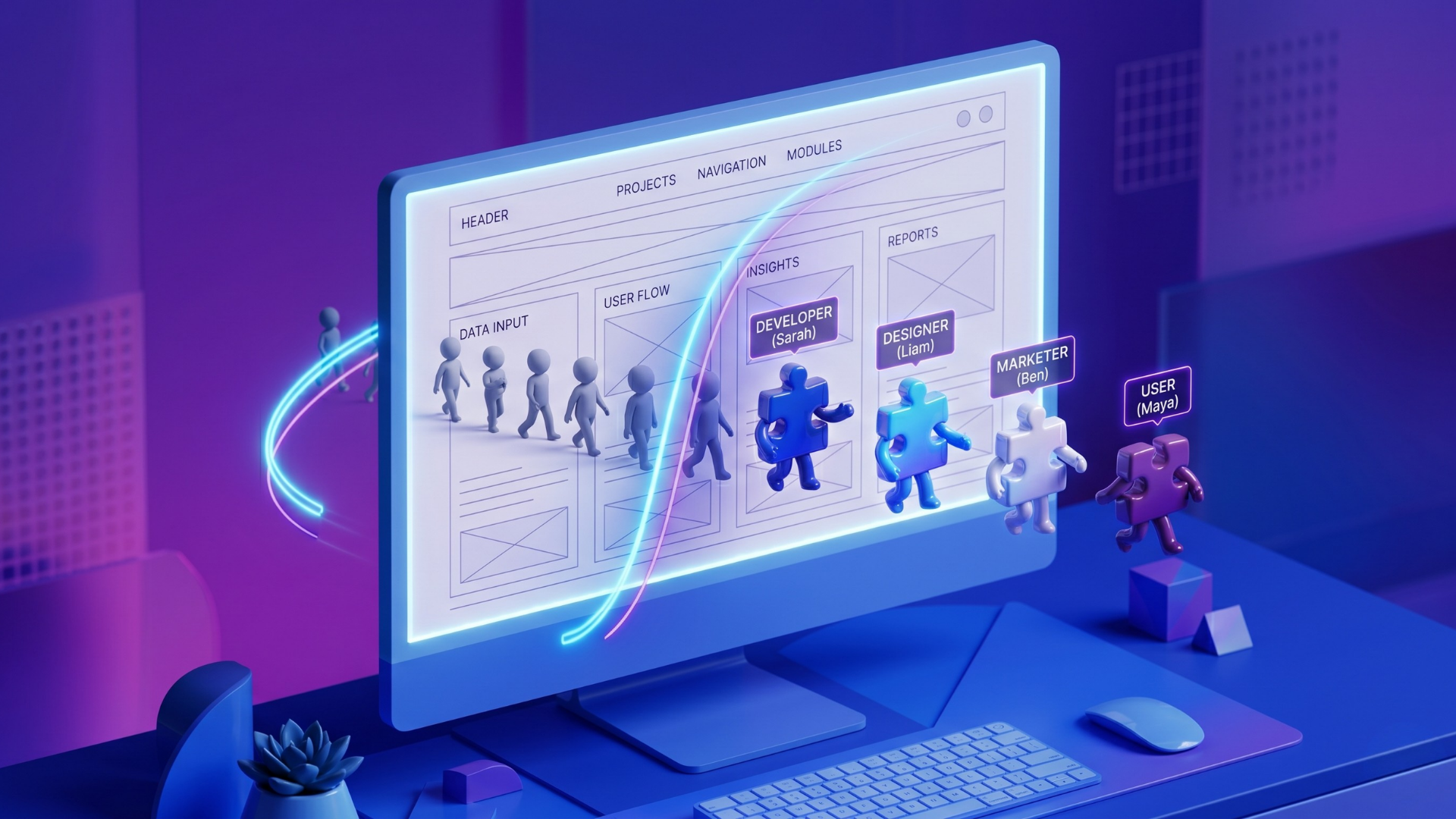
Most website visitor tracking platforms stop at identification. They tell you which companies visited your site, how long they stayed, and what pages they viewed. That sounds useful until your sales team asks the real question: “What do we do next?”
This is where many businesses lose momentum.
Visitor identification software alone does not generate pipeline. Without verified emails, LinkedIn URLs, stakeholder targeting, and structured outreach workflows, anonymous traffic remains just another dashboard metric.
Modern B2B lead generation requires more than company recognition. It requires actionable prospecting intelligence that helps sales teams start conversations with the right people at the right time.
In this guide, we compare visitor identification vs prospecting and explain why businesses in the UK are moving toward complete outreach enablement platforms like Dynamic Leads.
What Is Visitor Identification Software?
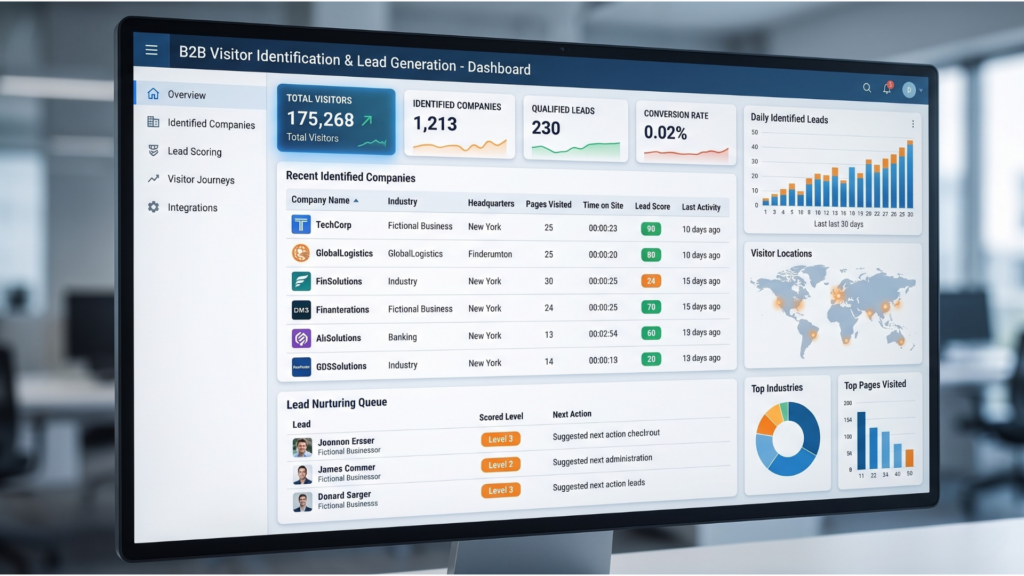
Visitor identification software helps businesses uncover which companies visit their website without filling out a form. Platforms like Snitcher, Leadinfo, and Whois Visiting focus heavily on identifying anonymous website visitors using IP intelligence and company databases.
These tools usually provide:
- Company names
- Industry information
- Website visit duration
- Pages visited
- Location data
- Session frequency
For marketing teams, this creates visibility into buyer intent. You can see which businesses repeatedly visit pricing pages, product pages, or case studies.
However, identification alone creates a major operational gap.
Most visitor identification software does not provide:
- Decision-maker emails
- Verified direct contacts
- LinkedIn profile URLs
- Multi-stakeholder targeting
- Automated outreach workflows
- Prospect qualification logic
This means sales teams still spend hours manually researching contacts on LinkedIn or external databases before they can even send a first message.
That delay reduces intent momentum.
In competitive B2B markets, timing matters. A company researching solutions today may choose a competitor tomorrow. Businesses that can identify and immediately engage prospects gain a measurable advantage.
This is why more B2B companies are shifting from simple website visitor tracking toward complete prospecting enablement systems.
Why Prospecting Matters More Than Identification
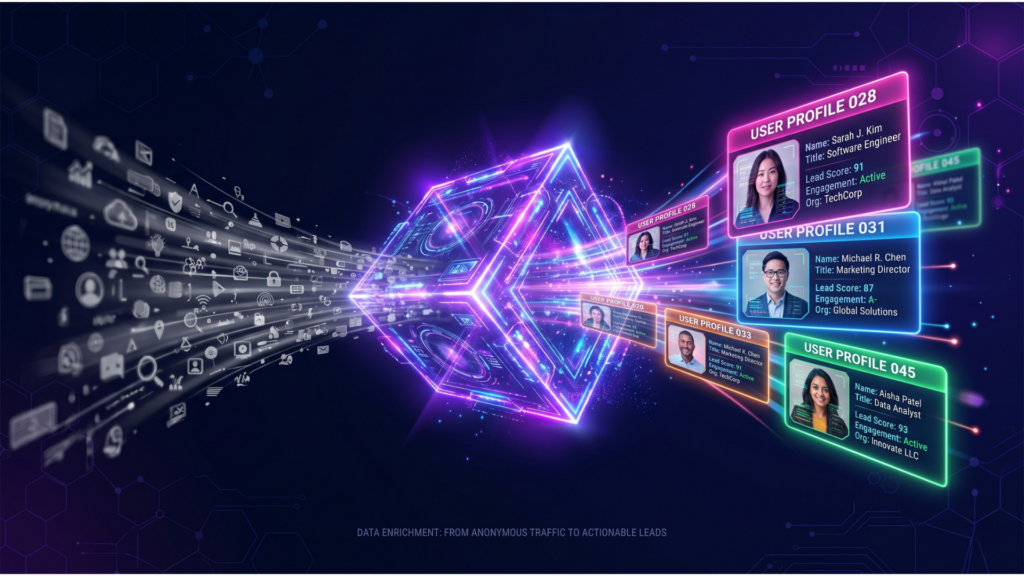
Visitor identification software tells you who visited.
Prospecting tells you who to contact and how to convert them.
That difference changes everything.
A modern B2B lead generation workflow should move beyond company recognition and into direct sales activation. The goal is not simply tracking anonymous website visitors. The goal is creating qualified conversations.
Here is what advanced prospecting workflows include:
Verified Emails
Sales teams need accurate contact information to launch outreach quickly. Verified business emails reduce bounce rates and improve deliverability.
LinkedIn URLs
LinkedIn prospecting remains one of the strongest B2B outreach channels in the UK market. Direct profile URLs allow SDRs and founders to personalize connection requests and messages.
Stakeholder Targeting
One visitor rarely represents one buyer.
Complex B2B sales involve multiple stakeholders:
- Founders
- Operations managers
- Procurement leads
- Marketing directors
- IT decision-makers
Advanced prospecting platforms identify multiple relevant contacts inside each company account.
Outreach Enablement
Identification without activation creates stalled pipeline opportunities.
Effective systems support:
- CRM enrichment
- Prospect segmentation
- Cold email workflows
- LinkedIn outreach
- Sales prioritization
- Buyer intent scoring
This creates a repeatable prospecting engine rather than a passive analytics dashboard.
Businesses using Dynamic Leads gain visibility into both the visiting company and the people most likely to influence purchasing decisions. That dramatically shortens time-to-outreach and improves conversion efficiency.
Visitor Identification vs Prospecting: The Real Difference
Visitor Identification Software vs Prospecting Workflows
| Feature | Visitor Identification | Prospecting Workflow |
| Company Identification | Yes | Yes |
| Anonymous Visitor Tracking | Yes | Yes |
| Verified Emails | Limited | Yes |
| LinkedIn URLs | Rarely | Yes |
| Stakeholder Targeting | Minimal | Advanced |
| Outreach Automation | No | Yes |
| CRM Sync | Sometimes | Yes |
| Buyer Intent Activation | Limited | High |
| Sales Enablement | Low | High |
| Revenue Impact | Indirect | Direct |
The biggest misconception in B2B lead generation is assuming that visitor tracking equals pipeline generation.
It does not.
Revenue growth happens when identified traffic becomes actionable sales intelligence.
A company visiting your pricing page means little unless your team can:
- Find the right stakeholder
- Access verified contact details
- Launch personalized outreach
- Follow structured prospecting workflows
- Track engagement progression
This is where Dynamic Leads positions itself differently from traditional visitor identification software. Instead of stopping at company recognition, the platform focuses on outreach enablement and sales activation. That means businesses can move from: Anonymous Visitor → Qualified Contact → Active Opportunity without relying on multiple disconnected tools.
How Modern B2B Teams Use Prospecting Data

High-performing B2B teams no longer separate marketing analytics from outbound sales. They integrate both. A modern workflow often looks like this:
Step 1: Identify Website Visitors
Track anonymous website visitors and detect high-intent companies.
Step 2: Enrich the Account
Pull company data including:
- Industry
- Employee size
- Revenue range
- Technologies used
- Geographic location
Step 3: Find Stakeholders
Identify relevant decision-makers including:
- CEOs
- Heads of Sales
- Marketing Directors
- Procurement Managers
Step 4: Retrieve Contact Data
Access:
- Verified emails
- LinkedIn URLs
- Job titles
- Department roles
Step 5: Launch Outreach
Initiate:
- Cold email campaigns
- LinkedIn connection requests
- Follow-up sequences
- CRM workflows
Step 6: Prioritize Intent Signals
Focus sales activity on:
- Repeat visitors
- Pricing page traffic
- High session duration
- Multi-user account engagement
This workflow transforms website traffic into a scalable outbound sales system.
For startups and established businesses alike, this creates a predictable lead generation process that reduces reliance on inbound forms alone.
Why UK Businesses Need Outreach Enablement Now
The UK B2B market has become significantly more competitive over the last few years.
Buyers conduct more research independently before speaking to sales teams. According to Gartner, B2B buyers spend substantial time researching online before engaging vendors directly. That creates both a challenge and an opportunity. Businesses that rely only on form submissions miss a large percentage of buying intent.
Meanwhile, businesses using visitor identification software combined with prospecting workflows can engage buyers earlier in the decision cycle.
This matters because:
- Website visitors rarely convert on first visit
- Buyers compare multiple vendors
- Decision-making groups are expanding
- Response speed impacts conversion rates
Outreach enablement allows businesses to proactively engage interested accounts before competitors do.
For UK startups, agencies, SaaS providers, and service businesses, this can dramatically improve:
- Pipeline generation
- Sales velocity
- Meeting booking rates
- Lead quality
- Revenue predictability
The companies winning today are not waiting for inbound forms. They are identifying intent and activating outreach immediately.
Choosing the Right Visitor Identification Software
Not all platforms solve the same problem.
When evaluating visitor identification software, businesses should ask:
Does the platform provide verified emails?
Without direct contact data, sales activation slows down significantly.
Can it identify multiple stakeholders?
B2B sales rarely involve a single buyer.
Does it support LinkedIn prospecting?
LinkedIn remains essential for modern B2B outreach.
Does it integrate with outreach workflows?
Data without execution has limited value.
Can sales teams act immediately?
The shorter the gap between intent and outreach, the higher the conversion potential.
Dynamic Leads is designed specifically for businesses that want more than passive visitor tracking. Instead of simply showing website activity, it enables sales teams to turn intent into conversations through verified contacts, LinkedIn intelligence, and prospecting workflows built for pipeline growth.
Conclusion
Visitor identification software helps businesses understand who visits their website. Prospecting workflows help businesses convert those visitors into revenue.
That distinction matters.
If your current platform only shows company names without verified emails, LinkedIn URLs, stakeholder targeting, or outreach enablement, your sales team is still doing most of the heavy lifting manually. Modern B2B lead generation requires more than visibility. It requires action.
Dynamic Leads bridges the gap between visitor identification and revenue-focused prospecting by helping businesses identify intent, uncover decision-makers, and launch outreach faster. If you want to transform anonymous website traffic into qualified pipeline opportunities, now is the time to upgrade your prospecting workflow.
See if your website traffic is identifiable
Book a demo with Dynamic Leads and discover how verified emails, LinkedIn URLs, stakeholder targeting, and outreach workflows can accelerate your B2B growth.
FAQ Section
Visitor identification software tracks anonymous website visitors and identifies the companies visiting your website using IP and intent data.
Prospecting goes beyond tracking by providing verified emails, LinkedIn URLs, stakeholder targeting, and outreach workflows that help sales teams contact buyers directly.
LinkedIn URLs help sales teams personalize outreach, connect with decision-makers, and build stronger B2B relationships faster.
Prospecting workflows are structured sales processes that include lead enrichment, contact discovery, outreach automation, and follow-up sequences.
Most B2B purchases involve multiple decision-makers. Stakeholder targeting helps businesses identify and engage everyone involved in the buying process.