

Most businesses do not struggle with generating website traffic. They struggle with what happens after the traffic arrives.
Leads go cold, sales teams miss opportunities, and valuable website visitors disappear without ever being contacted. For many UK businesses, the issue is not demand generation. It is poor lead management.
An effective lead management strategy helps businesses identify buying intent, prioritise high value prospects, and move leads through the sales pipeline with confidence. Whether you run a growing startup or an established company, mastering lead management can dramatically improve conversion rates and sales performance.
In this guide, we will break down how modern lead management works, the biggest mistakes businesses make, and how tools like Dynamic Leads help turn anonymous website traffic into qualified B2B opportunities.
What Is Lead Management?
Lead management is the process of capturing, organising, tracking, nurturing, and converting potential customers throughout the buying journey.
A strong lead management system ensures that no valuable opportunity slips through the cracks. Instead of relying on scattered spreadsheets or manual follow ups, businesses create a structured workflow that moves prospects towards conversion.
Modern B2B lead management typically includes:
- Website visitor tracking
- Lead capture
- Data enrichment
- Lead scoring
- CRM integration
- Sales outreach
- Performance tracking
For many businesses, the biggest challenge is visibility. Traditional forms only capture a small percentage of visitors. Most high intent buyers never fill out a form at all.
That is where visitor identification software becomes valuable. Platforms like Dynamic Leads help businesses uncover company level visitor data, identify buying signals, and provide sales teams with actionable insights.
Why Lead Management Matters
Businesses with structured lead management processes often achieve:
- Higher conversion rates
- Faster response times
- Better sales and marketing alignment
- Improved customer acquisition costs
- Increased revenue predictability
Without proper lead management, even high traffic websites can underperform commercially.
The Core Stages of Effective Lead Management
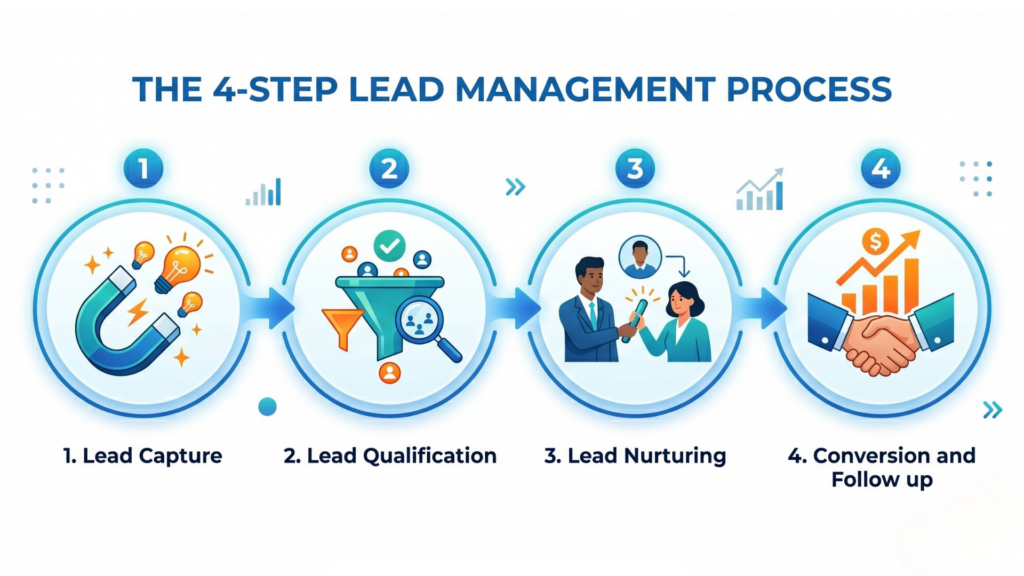
1. Lead Capture
The first step is identifying potential customers.
Traditional methods include:
- Contact forms
- Newsletter sign ups
- Live chat
- Demo requests
However, relying solely on form submissions leaves massive gaps in your pipeline.
Website visitor tracking tools help businesses identify anonymous companies visiting their site, including pages viewed, visit duration, and behavioural intent.
This gives sales teams a much larger pool of qualified opportunities.
2. Lead Qualification
Not every lead deserves equal attention.
Lead qualification helps businesses focus on high intent prospects based on factors such as:
- Industry
- Company size
- Budget
- Buying intent
- Website activity
- Decision maker engagement
Lead scoring systems rank prospects automatically, helping sales teams prioritise outreach efficiently.
Common Lead Qualification Frameworks
- BANT (Budget, Authority, Need, Timeline)
- CHAMP
- MEDDIC
For startups and SMEs, simple qualification systems often work best initially.
3. Lead Nurturing
Most B2B buyers do not convert immediately.
Lead nurturing involves building trust over time through:
- Email campaigns
- Retargeting ads
- LinkedIn outreach
- Educational content
- Case studies
- Product demonstrations
Businesses that consistently nurture leads remain top of mind when buyers are ready to act.
4. Conversion and Follow Up
Fast response time matters.
Research consistently shows that leads contacted quickly are far more likely to convert. A delayed response can result in lost revenue and missed opportunities.
This is why automated lead alerts and CRM integrations are essential for modern B2B lead generation.
Common Lead Management Mistakes Businesses Make

Even experienced companies struggle with lead management execution. Here are the most common issues:
No Defined Process
Many businesses generate leads but lack a structured workflow. Without clear ownership and follow up processes:
- Leads go untouched
- Sales cycles slow down
- Opportunities disappear
Ignoring Anonymous Traffic
Only a small percentage of visitors' complete forms. Businesses focusing solely on inbound form fills ignore valuable buying signals from anonymous visitors already researching solutions.
Poor Lead Enrichment
Incomplete data creates weak outreach. Sales teams need enriched company information such as:
- Industry
- Revenue estimates
- Employee size
- Contact information
- LinkedIn profiles
The more context sales teams have, the more personalised and effective outreach becomes.
Weak Sales and Marketing Alignment
Marketing teams often focus on lead volume while sales teams focus on lead quality. Effective lead management requires shared KPIs and collaborative reporting.
Inconsistent Follow Up
Many leads are lost simply because businesses stop following up too early. B2B buyers often require multiple touchpoints before conversion.
How Dynamic Leads Improves Lead Management

Dynamic Leads helps businesses transform anonymous website traffic into qualified sales opportunities.
Instead of waiting for prospects to complete forms, the platform identifies companies visiting your website and provides valuable firmographic insights.
Key Benefits of Dynamic Leads
Visitor Identification
Reveal which businesses are visiting your website, including pages viewed and engagement signals.
Lead Enrichment
Access company information that helps sales teams personalise outreach.
Sales Enablement
Support outreach with:
- Company intelligence
- Lead qualification data
- Stakeholder targeting
- LinkedIn prospecting
- Email outreach workflows
Pipeline Visibility
Understand where leads are entering your funnel and identify high intent buying behaviour.
Faster Sales Cycles
By engaging prospects earlier, businesses reduce delays and improve conversion opportunities.
For UK businesses competing in crowded B2B markets, speed and relevance matter. Dynamic Leads helps sales teams act before competitors do.
Best Practices for Modern Lead Management
To maximise results, businesses should follow these proven lead management strategies:
Prioritise Speed
Respond to qualified leads as quickly as possible. Automated alerts and CRM workflows reduce response delays dramatically.
Use Behavioural Intent Data
Page views, repeat visits, and pricing page engagement often signal purchase intent. These signals help sales teams focus on warm prospects first.
Align Marketing and Sales
Both teams should agree on:
- Lead qualification criteria
- Target accounts
- Reporting metrics
- Conversion goals
Automate Repetitive Tasks
Automation improves efficiency by handling:
- Lead routing
- Follow up reminders
- Data enrichment
- Lead scoring
- Email sequencing
Continuously Refine Your Pipeline
Lead management is not static. Regularly review:
- Conversion rates
- Lead quality
- Sales velocity
- Drop off points
- Customer acquisition costs
Data driven optimisation leads to long term growth.
Conclusion
Strong lead management is no longer optional for modern B2B businesses.
Companies that identify buyer intent early, nurture leads consistently, and align sales with marketing gain a major competitive advantage. Whether you are a startup or an established business, improving your lead management process can unlock more revenue from your existing website traffic.
Dynamic Leads helps businesses uncover hidden opportunities, enrich lead data, and accelerate sales outreach with confidence.
If you want to turn anonymous website visitors into qualified B2B opportunities, now is the time to upgrade your lead management strategy.
Ready to improve your lead management process?
Visit Dynamic Leads and book a demo today to discover how your website traffic can become your next pipeline growth channel.
FAQ Section
Lead management is the process of capturing, qualifying, nurturing, and converting business leads into customers through structured sales and marketing workflows.
Effective lead management improves conversion rates, reduces missed opportunities, and helps businesses maximise revenue from existing website traffic.
Lead generation focuses on attracting potential customers, while lead management focuses on organising, nurturing, and converting those leads into sales.
Website visitor tracking identifies anonymous companies visiting your website, helping sales teams uncover hidden buying intent and prioritise outreach.
Lead management software such as Dynamic Leads helps businesses identify website visitors, enrich lead data, automate workflows, and improve sales conversion performance.