
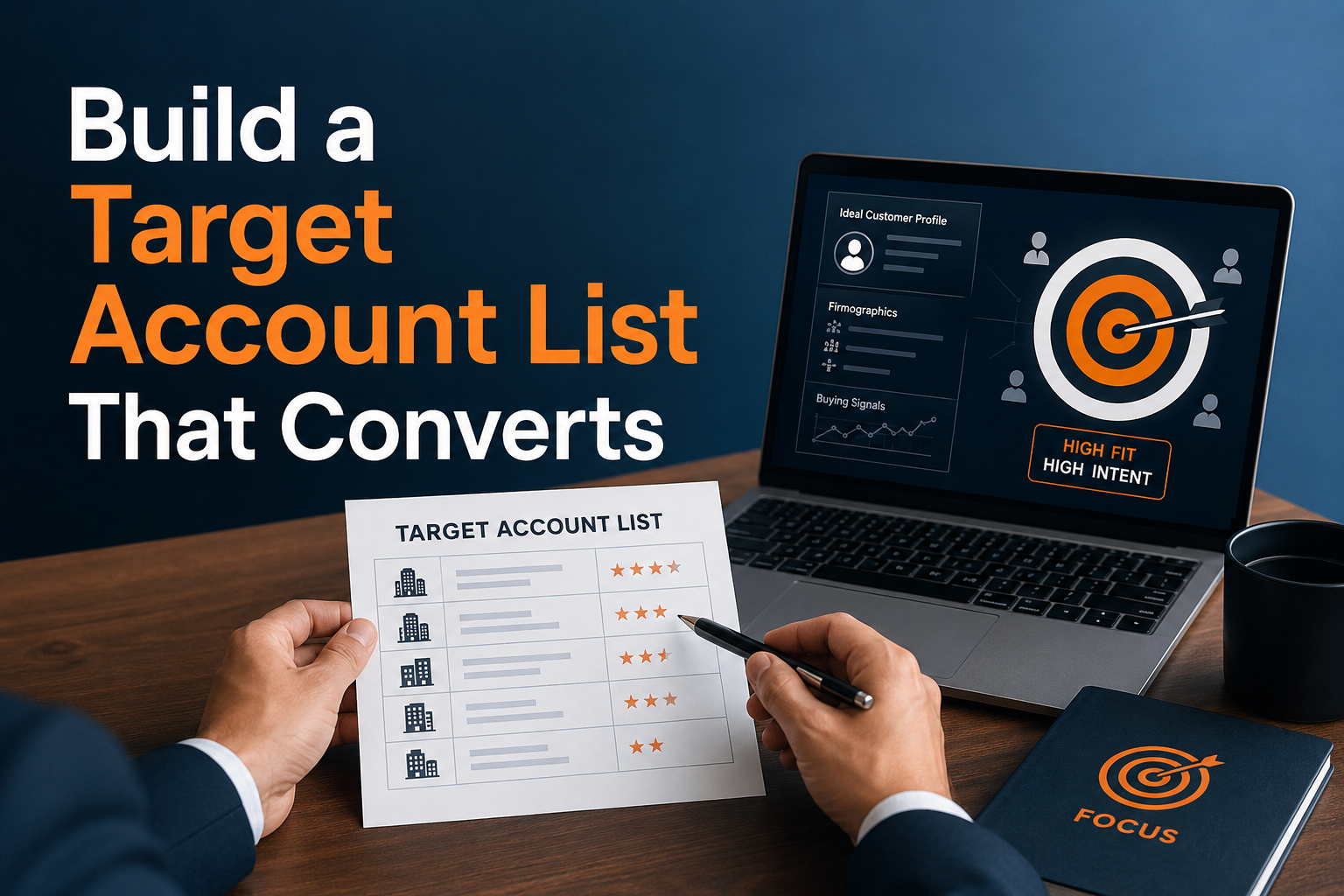
B2B sales teams spend hundreds of hours reaching out to companies that simply have no intention of buying. Traditional outbound playbooks rely on static databases, cold outreach to generic job titles, and outdated firmographic filters. The result is bloated CRM records, burned domains, and stagnant sales cycles.
To achieve predictable revenue growth, modern revenue operations (RevOps) teams must shift from static prospecting to dynamic targeting. Building a modern target account list requires combining exact firmographic alignment with real time behavioral cues. When you focus outreach strictly on accounts actively researching solutions like yours, sales conversations shift instantly from cold pitches to timely consultations.
Here is the exact framework to build, prioritize, and convert a modern B2B target account list.
Define Your Ideal Customer Profile Using Revenue Data
Building a high converting target account list starts with establishing an Ideal Customer Profile (ICP) based on historical closed-won deal data. RevOps teams analyse customer Lifetime Value (LTV), short sales cycles, and retention rates to identify exact firmographic, technographic, and demographic signals shared by top-tier accounts.
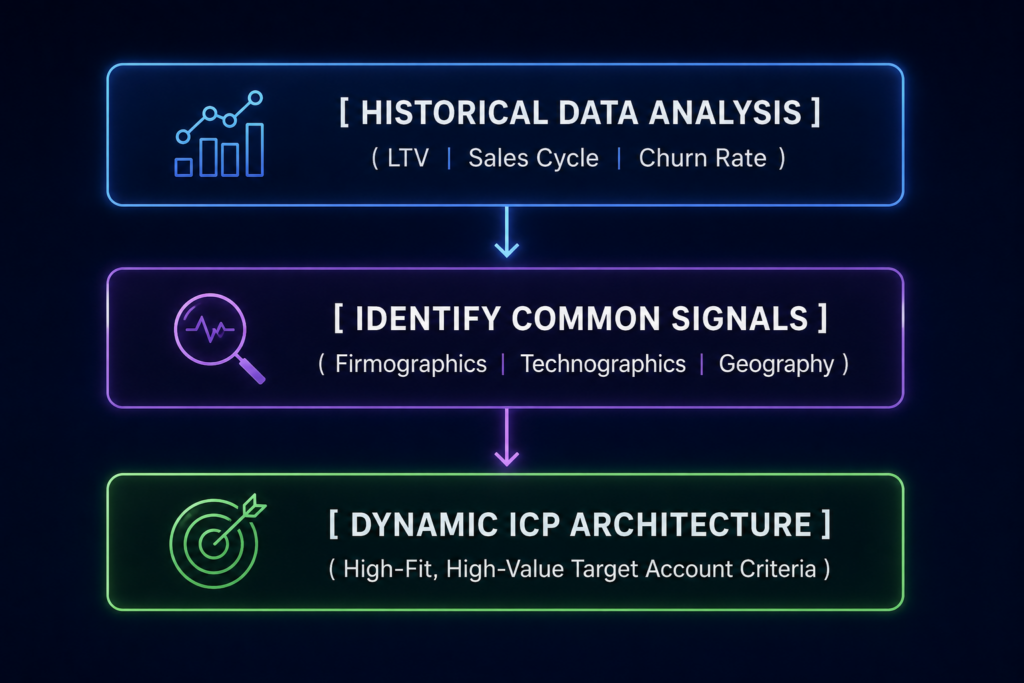
Most companies build their ICP around basic firmographics like industry and company size. High-performing teams dig deeper into technical stacks, funding rounds, and organisational shifts.
Firmographic Criteria: Employee headcount, annual revenue, location, and operational structure.
Technographic Signals: Software integrations, cloud infrastructure, and proprietary tech stacks.
Operational Indicators: Recent leadership hires, regional expansions, or structural reorganisations.
Analysing your top 20% most profitable clients unveils patterns that signal immediate fit. Layering these parameters ensures your target list contains accounts capable of generating enterprise LTV.
Accelerate Pipeline Velocity With Sales Intelligence Software
Website visitor identification transforms anonymous site traffic into actionable accounts for your target account list. By matching B2B visitor IP addresses to company domains, sales intelligence software reveals high-intent accounts actively researching your platform before they ever submit a form.
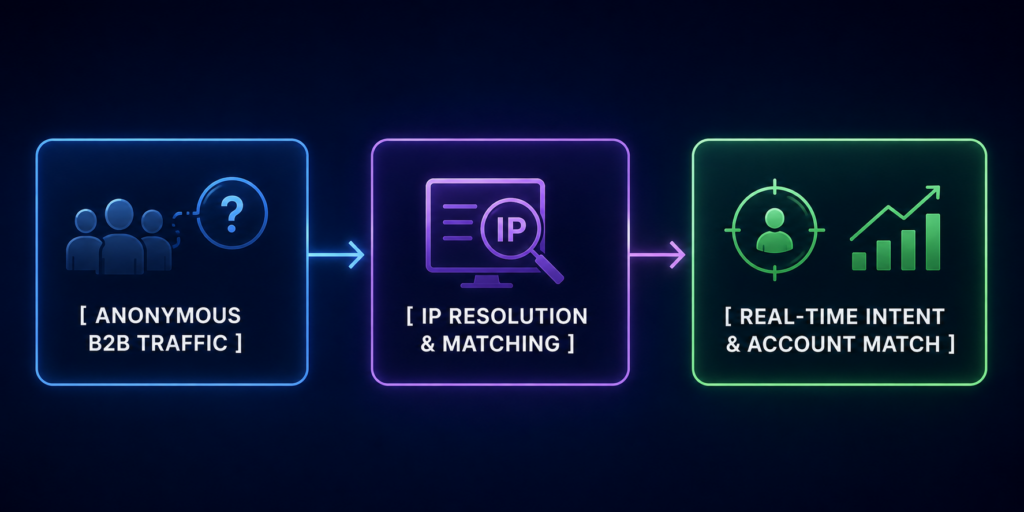
Up to 98% of B2B website visitors leave without filling in a lead form. These buyers are actively conducting research, evaluating pricing, and comparing product features in complete silence.
Integrating WVI tools like Dynamic Leads directly into your tech stack exposes these dark funnel interactions. When an account matches your core firmographics and views critical decision pages (such as pricing or integrations), that account should immediately enter your active target account list.
This automated real-time identification bridges the gap between passive marketing interest and proactive sales outreach.
Prioritise Accounts Using Intent Data and Lead Scoring
It prioritises target account list members based on active buying behaviours rather than static criteria. Combining first-party intent (site visits, content downloads) with third-party intent (external topic research) enables revenue teams to trigger outreach precisely when purchase interest peaks.
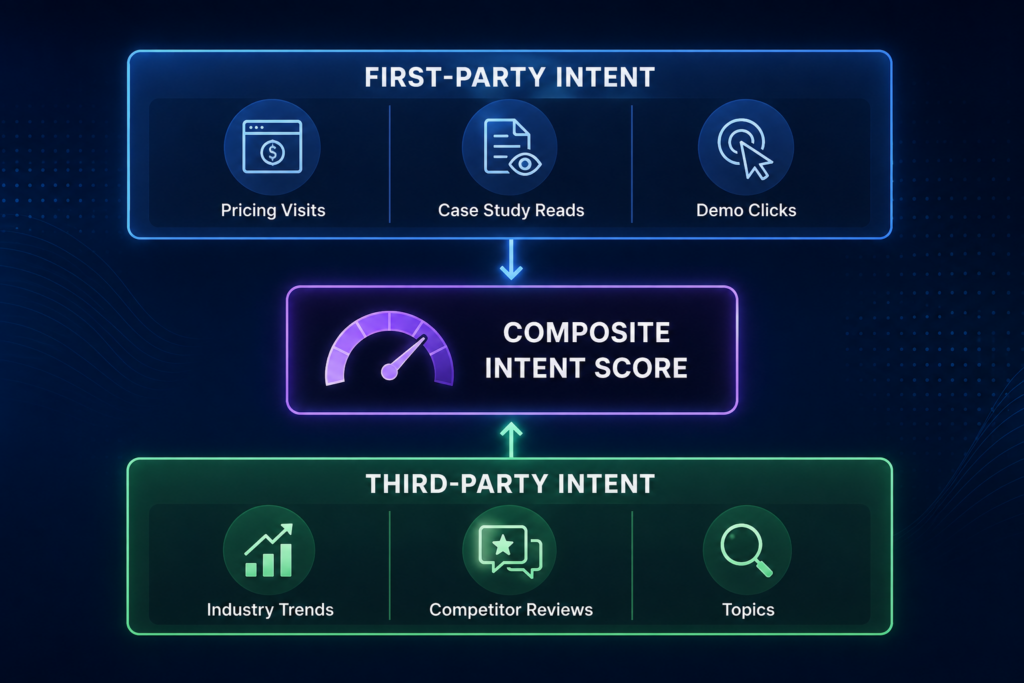
FPrioritising Target Accounts with Composite Intent Signals
First-party and third-party intent signals combine to create a composite intent score for prioritising target accounts. Not all accounts on your list carry equal commercial priority. An account matching your target size that visited your pricing page three times this week must be contacted before an account that merely matches your industry profile.
Categorising Intent Signals
• High Intent Signals: Visiting pricing pages, viewing integration documentation, comparing features. • Medium Intent Signals: Reading top-of-funnel blog posts, downloading white papers. • Low Intent Signals: Viewing careers pages or single social posts.
Establishing dynamic scoring models routes hot accounts directly to account executives while keeping lower-intent leads in automated nurture streams. This alignment improves pipeline velocity and prevents deal stagnation.
Streamline Sales Alignment and SLA Tracking
Effective account-based execution requires strict Service Level Agreements (SLAs) between sales and marketing. Establishing clear SLAs ensures marketing dynamically updates the target account list while sales commits to fast follow-ups on accounts exhibiting high intent signals.
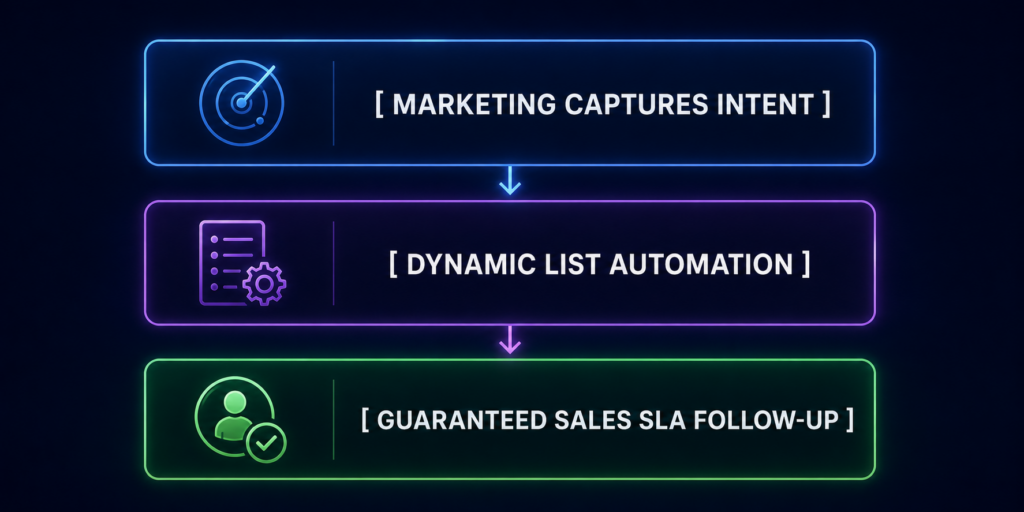
A well-engineered list fails without disciplined sales execution. When intent tracking signals that a target account has entered an active buying window, time to outreach is the critical metric.
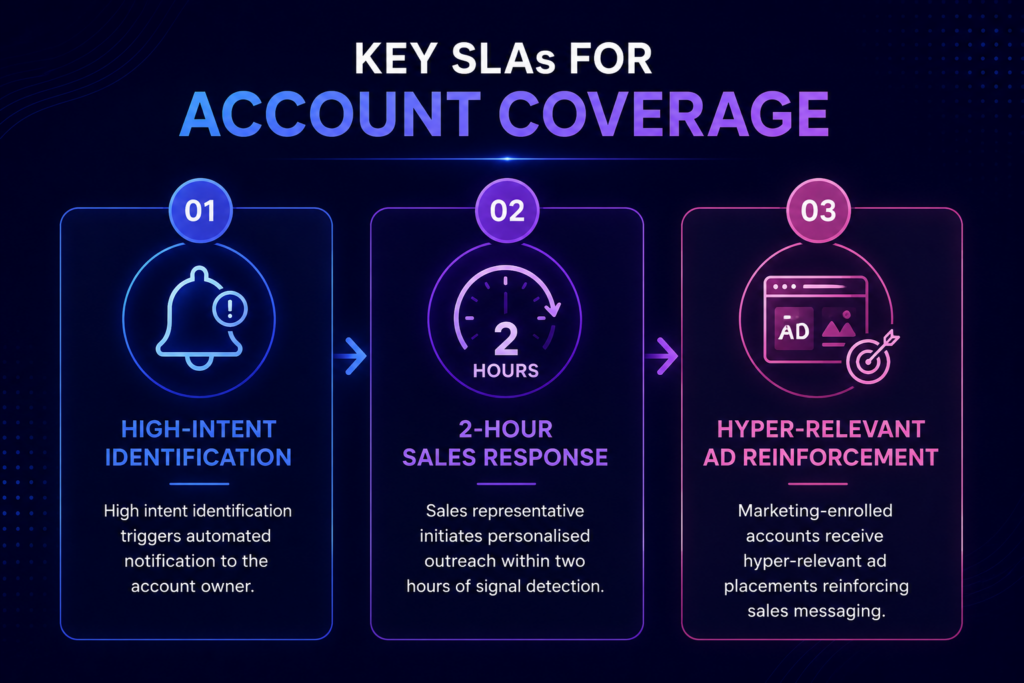
This coordinated multi-channel approach yields higher meeting booking rates and shorter deal cycles.
Frequently Asked Questions
What is a target account list in B2B sales?
A target account list is a curated index of high-value prospective companies that strictly match an organisation's Ideal Customer Profile. Revenue teams focus outbound sales and account-based marketing resources on these accounts to maximise conversion rates.
How often should you update your target account list?
Target account lists should update dynamically in real time using automated intelligence software. Static lists updated quarterly miss time-sensitive buying signals, whereas dynamic lists continuously add accounts demonstrating intent and remove disengaged prospects.
What is the difference between an ICP and a target account list?
An Ideal Customer Profile defines the theoretical characteristics of an optimal buyer, including firmographics, technographics, and operational traits. A target account list is the actual tactical directory of specific real-world companies that meet those ICP criteria.
How does intent data improve account selection?
It evaluates active online behaviour to identify accounts actively researching relevant solutions. Layering intent over standard firmographics ensures sales teams prioritise accounts currently in an active buying cycle.
Why is website visitor identification (WVI) critical for account selection?
WVI de-anonymises incoming business traffic, revealing which target accounts are browsing your site before they convert. This allows sales teams to reach out proactively while interest is highest.
Driving Revenue Growth Through Strategic Account Targeting
Building a high-converting target account list requires moving away from static databases and single-layer demographic filters. Real growth happens when firmographic alignment merges with real-time behavioural intelligence.
By de-anonymising website traffic, leveraging dynamic lead scoring, and establishing tight RevOps execution SLAs, your revenue team can deploy outbound campaigns that consistently turn intent signals into closed sales pipeline.
Ready to uncover ready-to-buy accounts hidden in your website traffic? Start your free trial with Dynamic Leads or book a tailored demo to transform your account selection strategy today