

B2B buying journeys are longer and more complex than ever before. With multiple decision-makers interacting across dozens of digital touchpoints, determining which channel actually closes the deal feels like solving a puzzle with missing pieces. If you cannot pinpoint which campaign generated a high-value opportunity, you risk pouring budget into non-performing activities while starving your true revenue drivers.
Implementing robust marketing attribution models solves this visibility crisis. By connecting early anonymous engagements to eventual closed deals, revenue teams gain complete operational control over their pipeline. In this guide, we break down how modern tracking frameworks work, why traditional analytics miss key intent signals, and how to select the right setup to accelerate growth.
Single Touch Marketing Attribution vs Multi Touch Frameworks
Single touch frameworks assign 100% of conversion credit to a single customer interaction, typically the initial visit or the final touch before deal creation. While simple to implement, these models ignore complex mid-funnel engagements across extended B2B buying journeys.
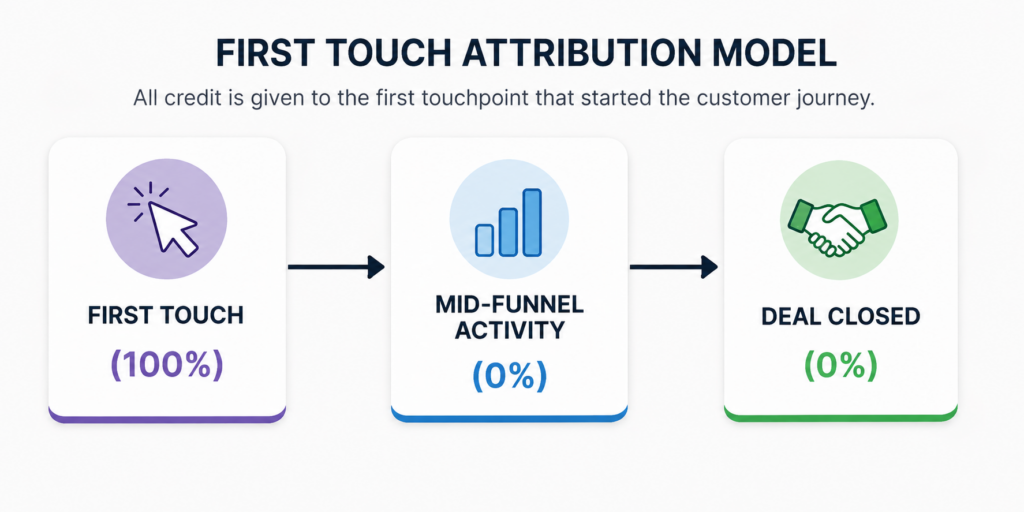
Single touch options offer a straightforward starting point for growth teams evaluating early marketing interactions. First-touch models award total revenue credit to the channel that introduced the prospect to your brand. This metric helps teams identify which top-of-funnel campaigns excel at generating brand awareness and bringing new accounts into the ecosystem.
Conversely, last-touch approaches credit the final point of engagement before a lead submits a form or books a discovery call. While helpful for testing bottom-of-funnel conversion assets, single touch tracking falls short for tech and B2B service firms. Long sales cycles require multiple nudges. Relying entirely on single-point data creates blind spots, obscuring how content marketing, website visitor identification, and nurture sequences collaborate to move accounts forward.
Leveraging Buyer Intent Data and Multi Touch Marketing Attribution
Multi-touch frameworks distribute deal credit across several interaction points along the customer journey. Integrating buyer intent data into these models reflects multi-member buying committees, providing RevOps metrics that accurately measure channel efficiency.
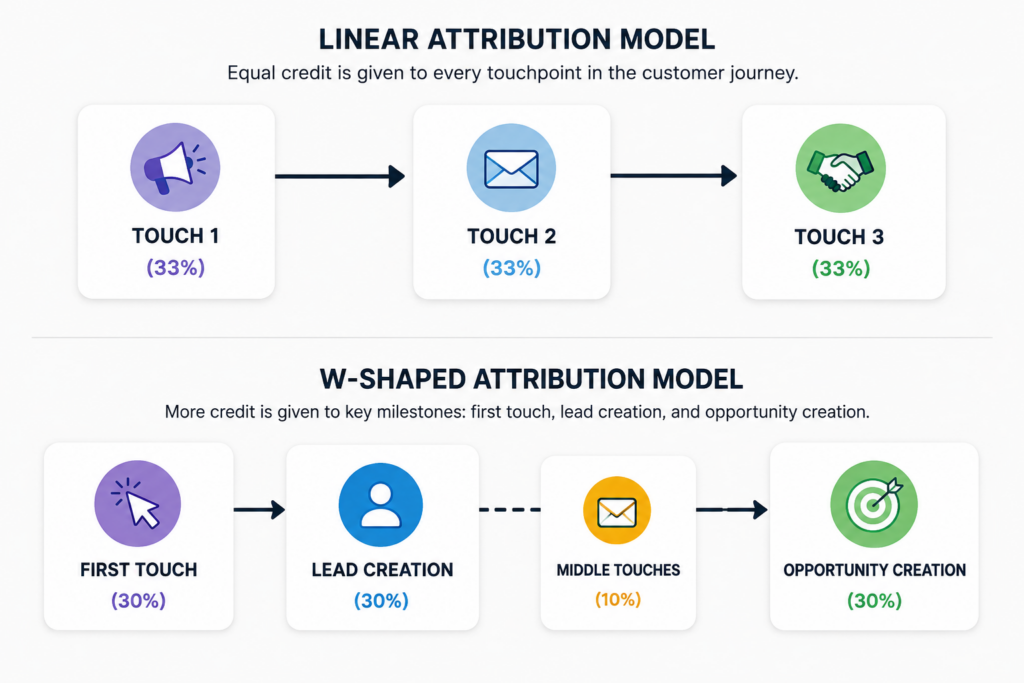
Modern B2B revenue teams rely on multi-touch setups to evaluate complex sales cycles. Linear tracking spreads credit equally across every documented touchpoint, providing a balanced baseline. Position-based models, such as U-shaped or W-shaped setups, weight specific critical milestones higher: initial discovery, lead creation, and opportunity stage creation.
By weighting key pipeline moments, multi-touch configurations reveal how high-value assets influence key accounts. Incorporating real-time buyer intent data into your stack further refines accuracy. When you identify key account activity before a form submit occurs, your RevOps team can track how early anonymous site visits correlate directly with closed revenue, leading to better sales cycle optimisation.
Sales Cycle Optimisation and B2B Pipeline Velocity Through Marketing Attribution
Selecting the right tracking model requires matching your operational framework to deal size, sales cycle length, and channel complexity. B2B firms focusing on sales cycle optimisation require multi-touch setups to accelerate B2B pipeline velocity while lowering acquisition costs.
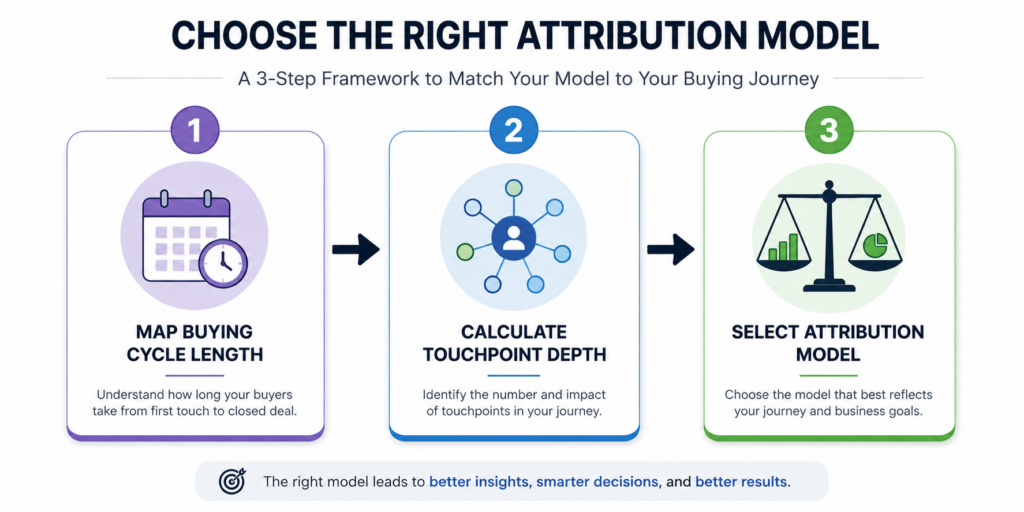
Selecting an analytical setup is not a one-size-fits-all decision. Companies with transactional sales and short decision timelines often operate effectively on position-based setups. However, enterprise B2B organisations managing six-month buying cycles need custom or algorithmic multi-touch models to maintain an accurate lead conversion rate.
To choose the optimal structure for sales cycle optimisation, evaluate your current data capture capabilities:
- Audit channel diversity: Map every active acquisition channel, including paid search, outbound email, organic social, and direct traffic.
- Evaluate anonymous traffic: Deploy B2B sales intelligence tools to identify non-converting company IP addresses engaging with your product pages.
- Track team alignment: Ensure marketing and sales agree on pipeline milestone definitions so performance data directly supports SLA tracking.
Combining multi-touch tracking with real-time website intelligence ensures your team spends money only on campaigns that verifiably drive bottom-line growth.
Frequently Asked Questions
What is the primary purpose of marketing attribution in B2B SaaS?
The primary purpose of marketing attribution in B2B SaaS is to connect revenue directly back to specific marketing touchpoints. This enables RevOps teams to optimise ad spend, shorten sales cycles, accurately measure customer acquisition costs, and scale high-performing acquisition channels with total financial confidence.
How does website visitor identification improve tracking accuracy?
Website visitor identification enriches tracking systems by turning anonymous IP addresses into firmographic account data. Capturing early intent signals before a user fills out a form allows revenue teams to credit top-of-funnel channels accurately rather than over-crediting final conversion pages.
What is the difference between linear and W-shaped tracking models?
Linear models distribute deal credit equally across all customer touchpoints. W-shaped models give 30% credit each to first touch, lead creation, and opportunity creation, while distributing the remaining 10% across middle nurture interactions.
Why do single touch models fail long B2B sales cycles?
Single touch models fail long sales cycles because they credit only one interaction point, ignoring months of nurture activity, content downloads, and multi-stakeholder engagements. This produces misleading data that undervalues crucial mid-funnel touchpoints needed to close complex deals.
Optimise Your Revenue Pipeline Today
Mastering campaign tracking is no longer optional for growth-focused B2B brands. Shifting from guesswork to data-backed measurement gives your RevOps team the clarity needed to optimise acquisition budgets, accelerate B2B pipeline velocity, and increase overall win rates.
When you combine a multi-touch setup with real-time B2B sales intelligence, you unlock total visibility over your entire buyer journey, from the very first anonymous site visit to the final closed deal. Ready to see which high-intent accounts are browsing your website right now? Book a demo with Dynamic Leads today and turn anonymous traffic into measurable pipeline growth.