

CRM Reporting Metrics For Modern B2B RevOps
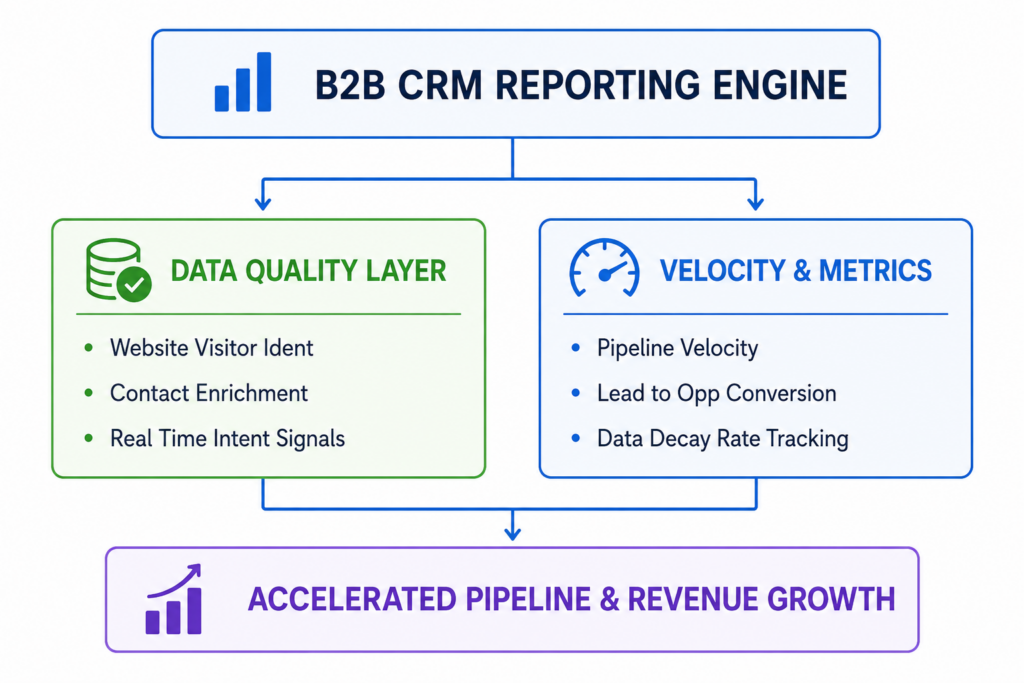
Poor CRM data quality quietly destroys B2B revenue engines. When your sales pipeline is cluttered with outdated contact details, duplicate leads, and unverified prospects, accurate forecasting becomes nearly impossible. Tracking the right CRM reporting metrics transforms raw CRM inputs into clear strategic insights, allowing sales and marketing teams to eliminate pipeline bottlenecks and plug costly revenue leakage.
Pipeline Velocity Metric
Pipeline velocity measures how quickly a prospect moves through your sales funnel from initial contact to closed win. Tracking this CRM reporting metric allows B2B revenue operations teams to pinpoint sales friction, accurately predict monthly recurring revenue, and identify high value deals that require immediate sales acceleration.
Pipeline velocity reveals the true speed of your revenue engine by combining four key sales variables: total open opportunities, average win rate, average deal size, and sales cycle length. When CRM data quality suffers, sales cycles drag on because account managers waste time reaching out to invalid contacts or disengaged accounts.
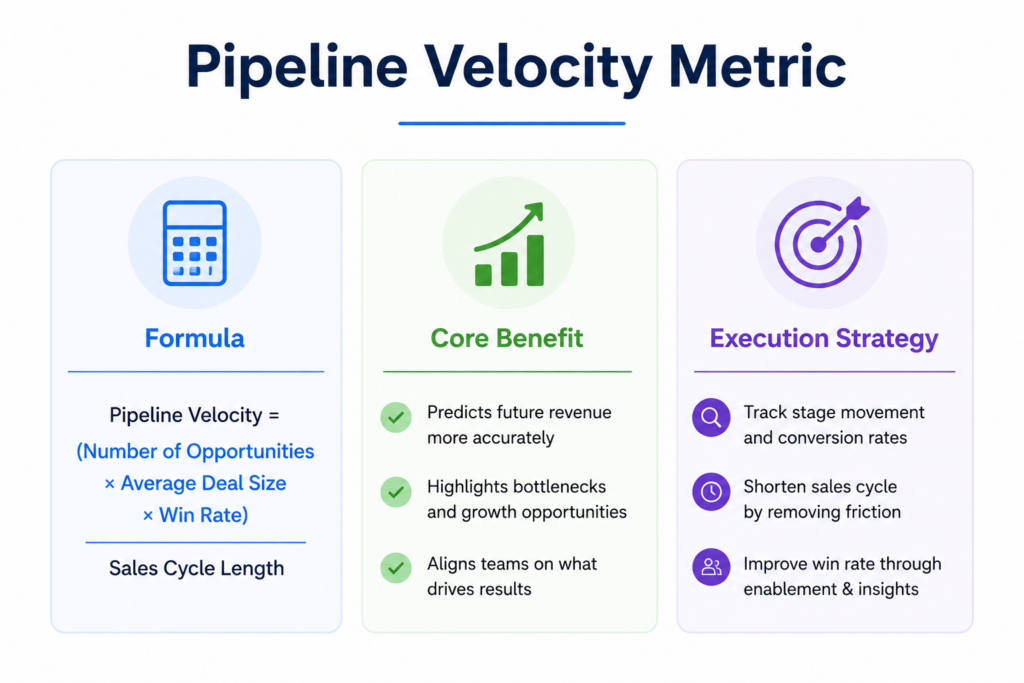
- Formula: (Number of Open Deals × Average Deal Value × Win Rate Percentage) ÷ Average Sales Cycle Length in Days
- Core Benefit: Highlights bottlenecks across specific sales stages so RevOps leaders can intervene before deals stall.
- Execution Strategy: Leverage real time website visitor identification through Dynamic Leads to feed verified, warm accounts directly into your sales pipeline, reducing the initial qualification cycle.
Lead To Opportunity Conversion Rate
Lead to opportunity conversion rate tracks the percentage of total inbound and outbound leads that transition into qualified sales opportunities. It evaluates lead source quality, sales team qualification accuracy, and alignment between B2B marketing and sales departments.
A low lead to opportunity conversion rate indicates either poor marketing lead quality or ineffective sales rep outreach. Tracking this metric within your CRM reporting suite reveals which acquisition channels yield genuine buyers and which ones generate digital noise.
- Marketing Alignment: Helps marketing teams refine targeting parameters based on true downstream revenue generation.
- Data Verification: Reduces friction by ensuring lead contact fields are fully enriched before rep assignment.
- Channel Optimisation: Allows teams to reallocate ad spend away from low converting channels toward intent driven visitor channels.
CRM Data Decay Rate Tracking
CRM data decay rate measures the speed at which contact and account records become inaccurate over time due to job changes, company rebrands, or expired email addresses. Tracking data decay allows revenue teams to maintain high CRM data quality and protect sender reputation.
B2B database records decay at an alarming rate every year. Ignoring this metric guarantees bounce rates will spike, cold outreach efficiency will collapse, and CRM reporting metrics will become fundamentally unreliable.
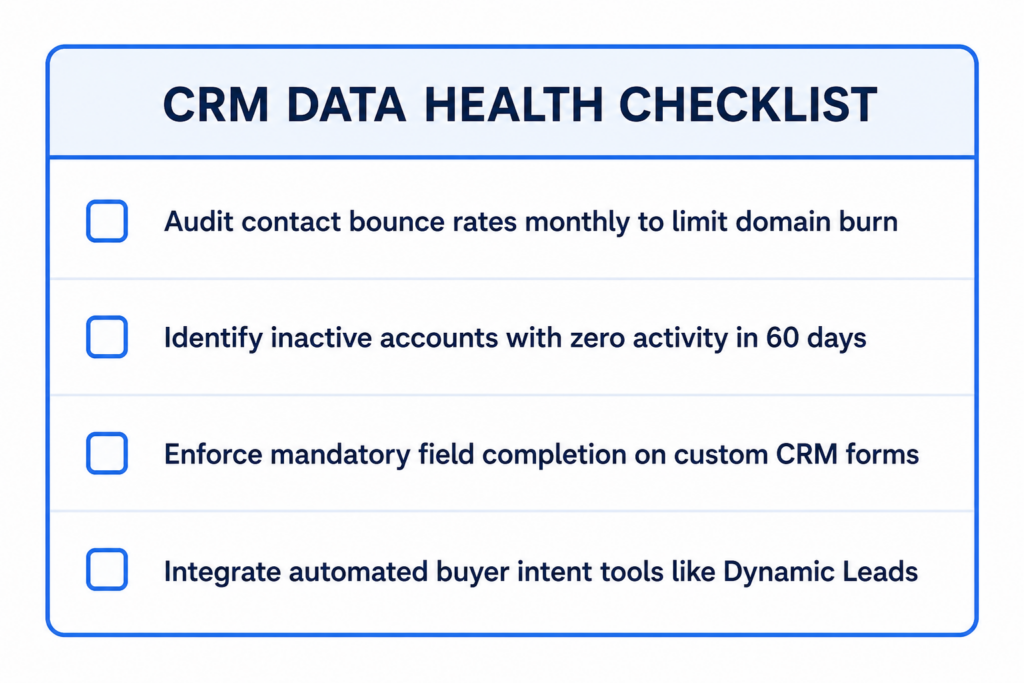
Proactively measuring data decay protects your domain authority, preserves sales rep productivity, and ensures every automated campaign reaches an active decision maker.
Customer Acquisition Cost Efficiency
Customer acquisition cost efficiency tracks total sales and marketing spend required to land a single new client. Monitoring CAC alongside customer lifetime value in CRM reporting dashboards ensures sustainable B2B revenue growth without overspending on cold acquisition.
Measuring customer acquisition cost allows executive leadership to balance marketing expenditure against long term contract revenue. High customer acquisition costs often point to leaky sales funnels where reps chase disengaged leads across prolonged sales cycles.
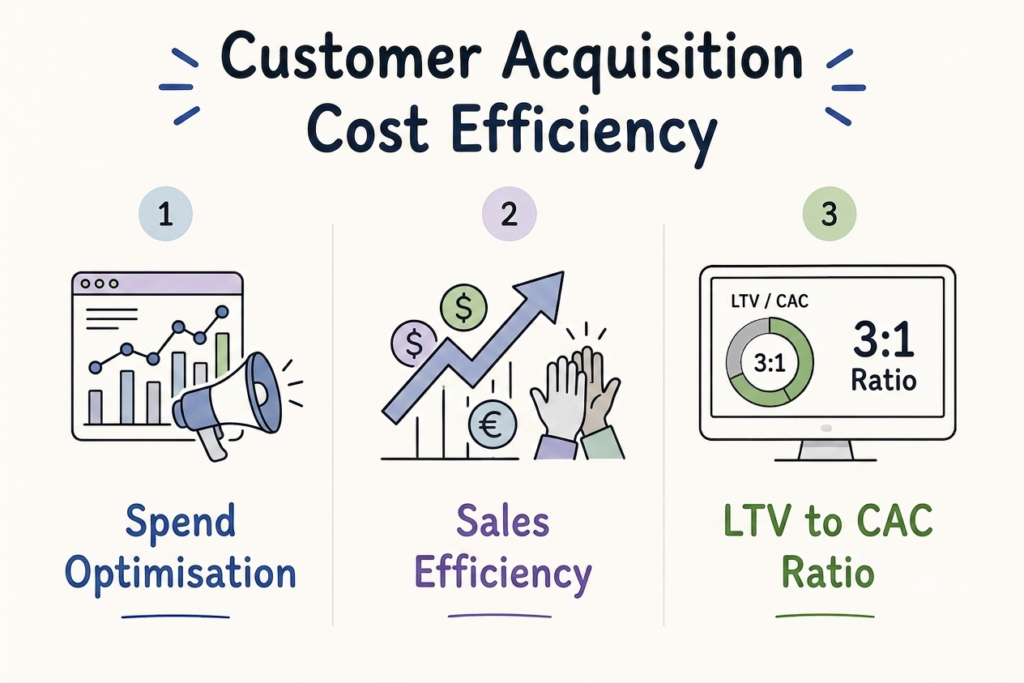
- Spend Optimisation: Isolate high cost acquisition channels that fail to close.
- Sales Efficiency: Equips reps with direct buyer intent data so they invest time exclusively on active accounts.
- LTV to CAC Ratio: Aim for a target ratio where customer lifetime value exceeds acquisition cost by three times or more.
Frequently Asked Questions
How does B2B revenue operations align sales and marketing metrics in a CRM?
B2B revenue operations unifies sales and marketing metrics by establishing shared pipeline benchmarks and automated reporting workflows within your CRM. This alignment eliminates data silos, ensures consistent SLA tracking, and gives leadership full visibility over the complete customer lifecycle from initial website visit to closed contract.
How often should RevOps leaders review CRM data quality metrics?
RevOps leaders should audit core CRM data quality metrics weekly to catch contact decay, field omissions, and duplicate records before they distort monthly revenue forecasts.
How does tracking buyer intent data improve sales funnel conversion?
Buyer intent data identifies anonymous B2B website visitors actively researching your solution, allowing sales reps to initiate outreach precisely when prospective accounts display high buying signals.
Accelerate Your B2B Revenue Engine Today
Mastering these essential CRM reporting metrics empowers B2B organisations to eliminate operational guesswork and convert raw account data into reliable pipeline growth. When you track pipeline velocity, monitor data decay, and refine lead conversion rates, your revenue operations become predictable and scalable.
Fixing CRM data quality begins at the top of your funnel. Dynamic Leads identifies the anonymous business visitors browsing your website, enriches their profile with accurate contact details, and pushes high intent accounts straight into your CRM system.
Stop losing deals to inaccurate data and invisible traffic. Book a Demo with Dynamic Leads today to unlock actionable buyer intent and supercharge your B2B sales performance.