

Company intelligence has become one of the most valuable assets in modern B2B sales. Yet many sales teams still rely on outdated prospect lists, generic messaging and assumptions about their target market.
The reality is simple. Buyers expect relevance. Decision makers are overwhelmed with sales emails every day, and only those that address real business needs stand out.
This is where company intelligence changes the game. By uncovering valuable insights about target accounts before outreach begins, sales and marketing teams can focus on the right opportunities, personalise conversations and shorten the path to revenue. In this article, we'll explore why company intelligence is the missing piece in B2B sales and how businesses can use it to drive stronger results.
The Growing Advantage of Knowing Your Prospects Better
The B2B buying journey has evolved dramatically over the last decade. Buyers now conduct extensive research before engaging with suppliers, making it harder for sales teams to capture attention.
Without accurate account insights, sales representatives often face several challenges:
- Low email response rates
- Poor lead qualification
- Longer sales cycles
- Wasted prospecting effort
- Lower conversion rates
Company intelligence provides a clearer picture of potential customers by combining multiple data sources, including:
- Company size and revenue
- Industry and market segment
- Technology stack
- Recent funding activity
- Hiring trends
- Geographic presence
- Website engagement behaviour
When sales teams understand these factors, they can prioritise accounts that closely match their ideal customer profile.
For example, a SaaS company selling cybersecurity software may discover that a prospect recently expanded its IT department and adopted cloud infrastructure solutions. These indicators suggest an increased likelihood of needing cybersecurity services.
Instead of sending a generic sales email, the team can create highly relevant messaging based on actual business developments.
The result is more meaningful conversations and improved sales outcomes.
From Guesswork to Precision: A Smarter Way to Sell
Successful selling is no longer about reaching the largest number of prospects. It is about reaching the right prospects at the right time. This is where company intelligence delivers measurable value.
Better Prospect Prioritisation
Not every lead deserves equal attention. Knowing your prospects better helps sales teams identify organisations that fit their ideal customer profile and demonstrate buying signals.
Common buying indicators include:
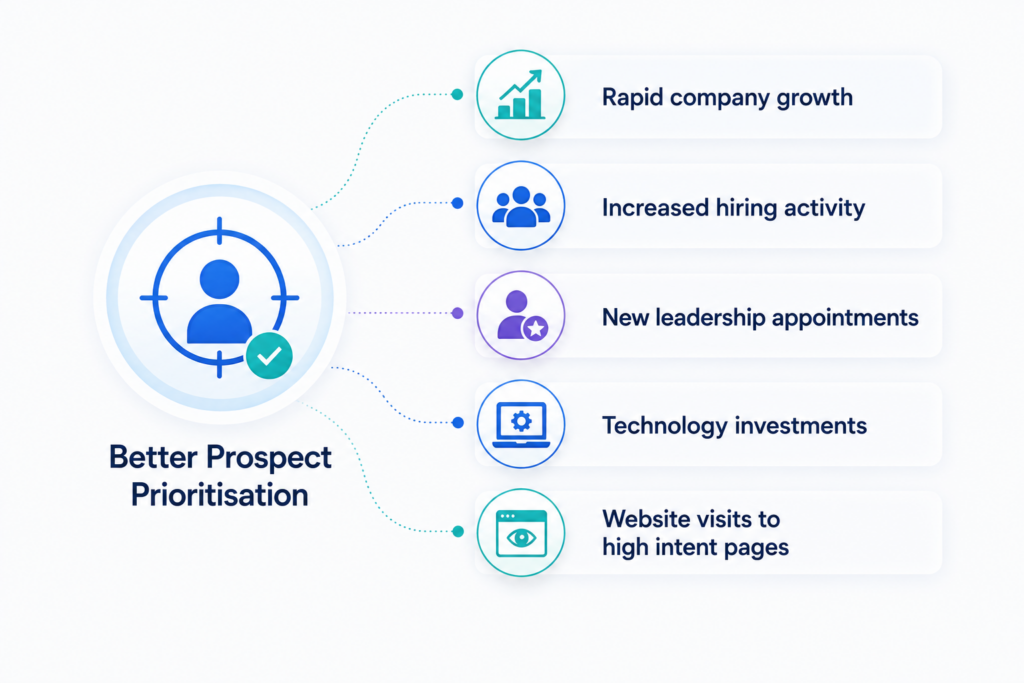
These signals allow teams to focus resources where opportunities are strongest.
More Personalised Outreach
Personalisation remains one of the most effective ways to increase engagement.
Using prospect research and buyer intent data, sales representatives can tailor messages around:
- Current business challenges
- Industry trends
- Recent company announcements
- Operational priorities
This approach creates relevance and builds credibility from the first interaction.
Improved Account Based Marketing
Account based marketing strategies depend on accurate account insights. This helps marketing and sales teams align around:
- Target account selection
- Content personalisation
- Campaign targeting
- Pipeline development
The result is a more coordinated revenue generation process that improves engagement across key accounts.
Turning Company Intelligence into Revenue Growth
Gathering information is only the first step. The real value comes from transforming insights into action. To maximise results, businesses should establish a structured process for using account insight throughout the sales cycle.
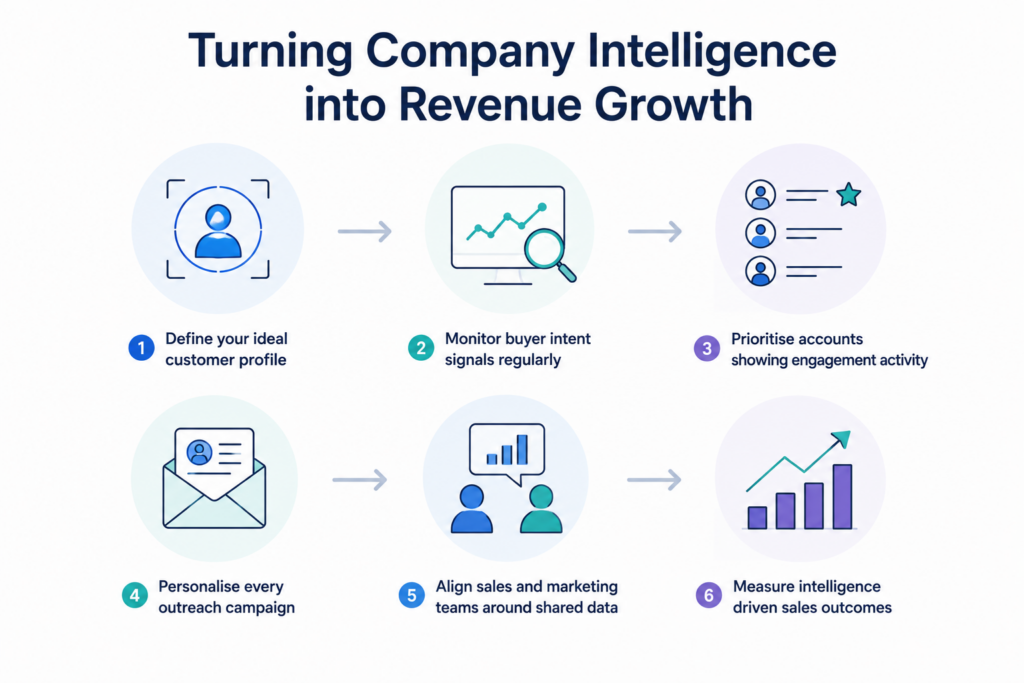
Businesses that consistently apply these practices often experience:
- Higher meeting booking rates
- Improved pipeline quality
- Faster sales cycles
- Greater win rates
- Increased revenue efficiency
As competition intensifies across virtually every B2B sector, organisations that leverage company intelligence effectively will be better positioned to identify opportunities before competitors do.
Build Your Predictable Pipeline Today
Company intelligence is no longer a “nice to have” rather it’s becoming an essential component of modern B2B sales success. From uncovering buyer intent signals to identifying anonymous website visitors and improving lead qualification, company intelligence empowers teams to make smarter decisions and engage prospects with greater precision.
If your organisation wants to generate more qualified opportunities, improve outreach performance and accelerate growth, now is the time to invest in a modern sales intelligence strategy.
Ready to see company intelligence in action? Contact us today, book a demo or start your Dynamic Leads trial to discover how real time account insights can help your team win more business.
FAQs
What is company intelligence?
Company intelligence is the collection and analysis of business information that helps sales and marketing teams understand target accounts and identify sales opportunities.
How does company intelligence support B2B lead generation?
It helps businesses identify qualified prospects, understand buyer behaviour and personalise outreach efforts to improve conversion rates.
What data is included in company intelligence?
Common data includes company size, industry, technology stack, hiring trends, buyer intent signals and website engagement activity.
What is the difference between company intelligence and sales intelligence?
Company intelligence focuses on account level insights, while sales intelligence often includes contact data and individual decision maker information.
How can website visitor identification improve company intelligence?
It reveals companies visiting your website, helping sales teams identify buying interest before prospects complete a form or request a demo.