

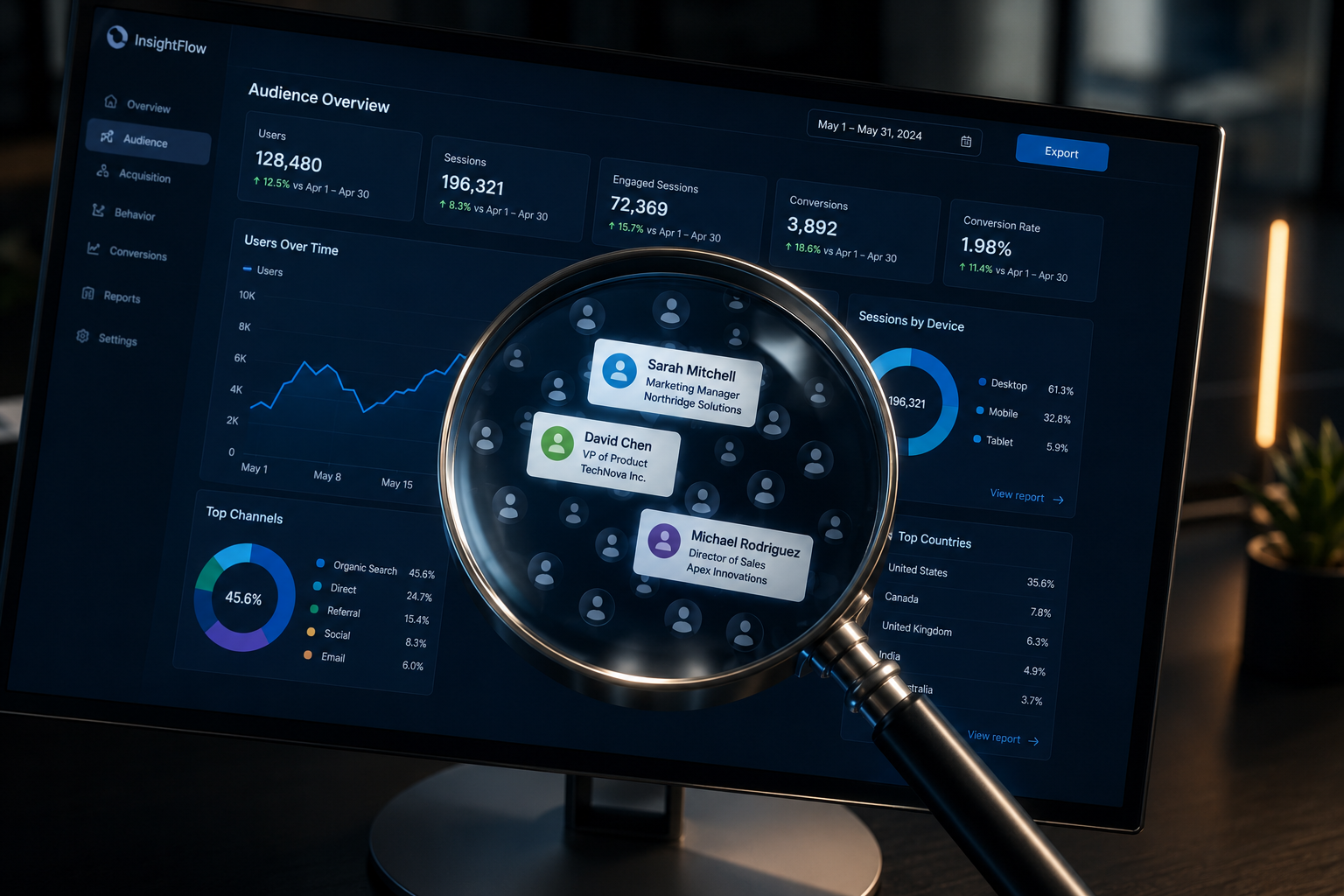
Most B2B websites receive far more traffic than the number of leads appearing in their inbox. Decision makers browse pricing pages, case studies, and service pages every day without filling out a form or booking a demo. For sales and marketing teams, that means missed revenue opportunities hiding in plain sight.
This is where companies identify anonymous website visitors using advanced website visitor identification software. Instead of waiting for prospects to convert, businesses can uncover which organisations visited their website, analyse buying intent, and engage high value accounts earlier in the sales cycle.
In this guide, you will learn how anonymous website tracking works, the technology behind it, its business benefits, and how tools like Dynamic Leads help B2B companies turn website traffic into pipeline growth.
Why Anonymous Traffic Is Costing B2B Companies Revenue
The numbers are stark. Research consistently shows that 97% or more of website visitors leave without ever completing a form or making contact. For B2B organisations with longer sales cycles and higher deal values, this represents an enormous volume of warm intent that simply evaporates.
The issue is not a lack of traffic. Most B2B companies invest significantly in SEO, paid search, content marketing, and events to drive visitors to their site. The gap lies in what happens once those visitors arrive. Without visibility into who is browsing, sales teams are left waiting for inbound enquiries while valuable buying signals go undetected.
This is where website visitor identification changes the game entirely.
Consider what you already know from a standard analytics platform:
- How many people visited a given page
- Which channels drove the traffic
- How long sessions lasted
- Which pages had the highest bounce rates
What you do not know, without dedicated visitor intelligence software, is who those people work for, what they are evaluating, and whether they match your ideal customer profile. That is the gap that visitor identification fills.
What Does It Mean to Identify Anonymous Website Visitors?
When businesses identify anonymous website visitors, they uncover the companies behind their web traffic without requiring visitors to complete a contact form.
Traditional analytics platforms such as Google Analytics show traffic numbers, locations, and user behaviour, but they rarely reveal which organisations are visiting. Website visitor identification software fills that gap by combining multiple data sources to identify businesses and buying intent.
These platforms typically provide:
- Company names
- Industry information
- Employee size
- Geographic location
- Pages visited
- Time spent on site
- Visit frequency
- Buyer intent signals
For example, if a cybersecurity firm notices that a manufacturing company repeatedly visits its pricing and compliance pages, the sales team can proactively reach out before competitors do.
This approach is particularly valuable for:
- B2B SaaS companies
- Marketing agencies
- IT and MSP providers
- Recruitment firms
- Manufacturing companies
- Cybersecurity businesses
Instead of relying solely on inbound forms, businesses gain visibility into the wider buying journey.
How Do Companies Identify Anonymous Website Visitors?

There is no single method. Modern B2B platforms layer several complementary technologies to deliver accurate, enriched visitor data. Here is how each one works.
Reverse IP Lookup
One of the core technologies used to identify anonymous website visitors is reverse IP lookup.
Every internet connected device has an IP address. Website visitor identification platforms compare visitor IP addresses against massive business databases to determine which company owns that network.
For example:
- A visitor lands on your website
- The software captures the IP address
- The platform matches it against company databases
- The system identifies the organisation associated with the visit
This method works particularly well for office networks and corporate internet connections.
Third Party Data Enrichment
IP identification gives you a company. Data enrichment gives you context. Platforms like Dynamic Leads cross reference matched visitor records against large proprietary firmographic databases, appending details such as company size, annual revenue, industry classification, and known decision maker contacts.
The result is a fully qualified lead record built without any interaction from the visitor themselves.
Behavioural Intent Signals
Identifying who visited is only the starting point. Understanding what they did during that visit is where the intelligence becomes commercially powerful. Website visitor identification software tracks:
- Which pages were viewed and in what sequence
- Time spent on pricing, product, and comparison pages
- Return visit frequency and recency
- Content downloads or video engagement
A prospect who has visited your pricing page on four separate occasions this month is demonstrating clear intent. Knowing that, combined with knowing which company they work for, gives your sales team a compelling reason to reach out.
Cookie Based and Pixel Tracking
First party cookies and tracking pixels allow platforms to connect anonymous sessions with known contacts in your CRM or email database. When a prospect clicks through from a marketing email and visits your website, the session can be attributed to their existing contact record, even if they submit no form during that visit.
This creates a continuous, joined up picture of individual buyer behaviour across multiple touchpoints over time.
The technology behind anonymous website tracking combines several data points to identify business visitors accurately.
Firmographic Data Enrichment
Many website visitor identification tools enrich visitor profiles using external business databases.
This can include:
- Revenue estimates
- Employee count
- Technology stack
- Industry category
- Company headquarters
- LinkedIn company profiles
Enriched firmographic data gives marketing and sales teams a clearer understanding of potential buyers.
How B2B Teams Use Website Visitor Identification Data
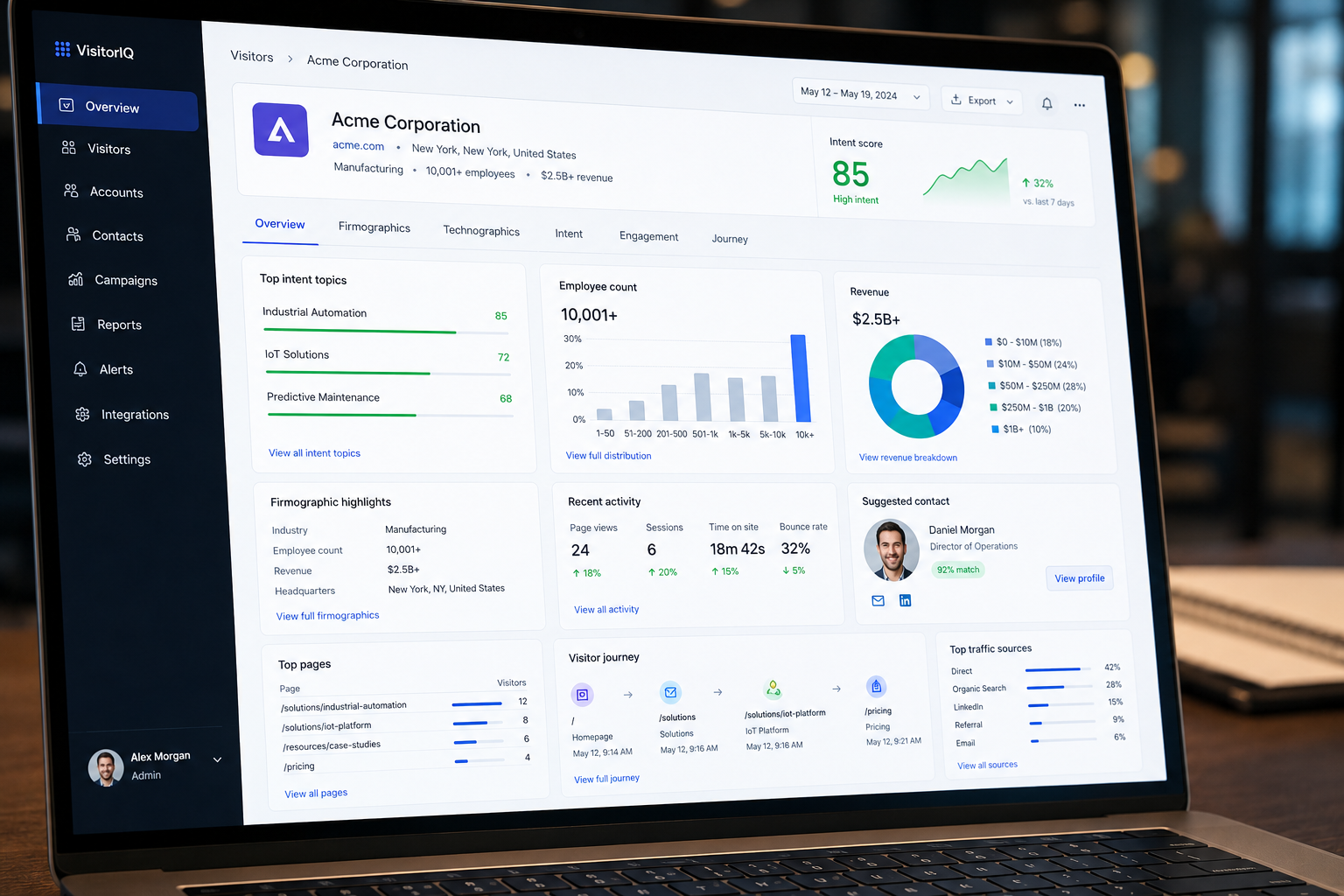
Surfacing the data is one thing. Operationalising it is where the revenue impact is realised.
Sales teams use visitor intelligence to:
- Prioritise outreach based on recency and page level intent
- Personalise initial contact with firmographic context gathered before the first call
- Identify which accounts within a target list are actively researching
- Trigger timely follow up when a prospect returns to a key page after previous contact
Marketing teams use it to:
- Build highly targeted retargeting audiences from identified company data
- Measure the true reach and engagement of account based marketing campaigns
- Understand which content formats attract in market buyers at each stage
- Attribute pipeline contribution to specific channels and campaigns
For IT companies, MSPs, and cybersecurity providers, visitor intelligence also supports competitive positioning. Identifying when a competitor's named account is browsing your solution pages is a signal worth acting on immediately.
What to Look For in Website Visitor Identification Software

The market has matured significantly, but not all platforms deliver the same commercial value. When evaluating your options, assess each tool against these criteria:
| Evaluation Criteria | What Good Looks Like |
| Match rate accuracy | High identification rates for corporate and SME traffic |
| Data freshness | Firmographic records updated regularly, not annually |
| CRM integration | Native connectors to Salesforce, HubSpot, Pipedrive |
| Intent scoring | Visitors ranked by engagement depth and recency |
| Contact enrichment | Decision maker names and contact details surfaced |
| GDPR compliance | Transparent data sourcing with full UK and EU compliance |
| Reporting | Clear dashboards that sales and marketing can both use |
Dynamic Leads is built specifically for B2B organisations that want to move beyond vanity metrics. With real time visitor identification, intent based scoring, and direct CRM integration, it transforms your existing website traffic into a consistent source of qualified outbound leads.
Is Website Visitor Identification Legal in the UK?

Yes, when implemented through a compliant platform. This is a question that surfaces frequently, and it deserves a clear answer.
GDPR governs the collection and processing of personal data. Reputable B2B visitor identification platforms identify companies and firmographic profiles rather than tracking individuals without their consent. Business IP addresses associated with corporate networks are generally not classified as personal data under current UK GDPR guidance from the Information Commissioner's Office.
That said, best practice requires you to:
- Update your website privacy policy to reflect the use of visitor tracking technology
- Ensure your cookie consent mechanism is correctly configured
- Use a platform that is transparent about its data sourcing methodology
- Confirm that contact enrichment data is sourced from legitimate, compliant providers
Dynamic Leads is designed with UK and EU compliance requirements built in, giving marketing and legal teams confidence that visitor identification operates within the appropriate legal framework.
FAQ
Anonymous website visitor identification is the process of revealing the company or individual behind a website visit that did not involve a form submission or login. Using IP lookup, data enrichment, and behavioural analytics, software surfaces firmographic and contact information from traffic that would otherwise remain completely invisible.
Most B2B platforms identify at the company level as a baseline. Contact enrichment features can surface individual names and details from within visiting organisations, particularly when those contacts are present in the platform's database or have previously engaged with tracked communications such as marketing emails.
Accuracy depends on the platform and the nature of the visitor's internet connection. Corporate office networks typically yield strong match rates. Remote workers on consumer broadband are less reliably attributed. High quality platforms provide confidence scoring alongside each identification so teams can prioritise accordingly.
Yes, when the software is built for compliance. UK GDPR primarily regulates personal data. Company level identification using business IP addresses falls outside the definition of personal data in most cases. Businesses should still update their privacy policy and ensure their chosen platform operates within current ICO guidelines.
Yes, when the software is built for compliance. UK GDPR primarily regulates personal data. Company level identification using business IP addresses falls outside the definition of personal data in most cases. Businesses should still update their privacy policy and ensure their chosen platform operates within current ICO guidelines.
Conclusion
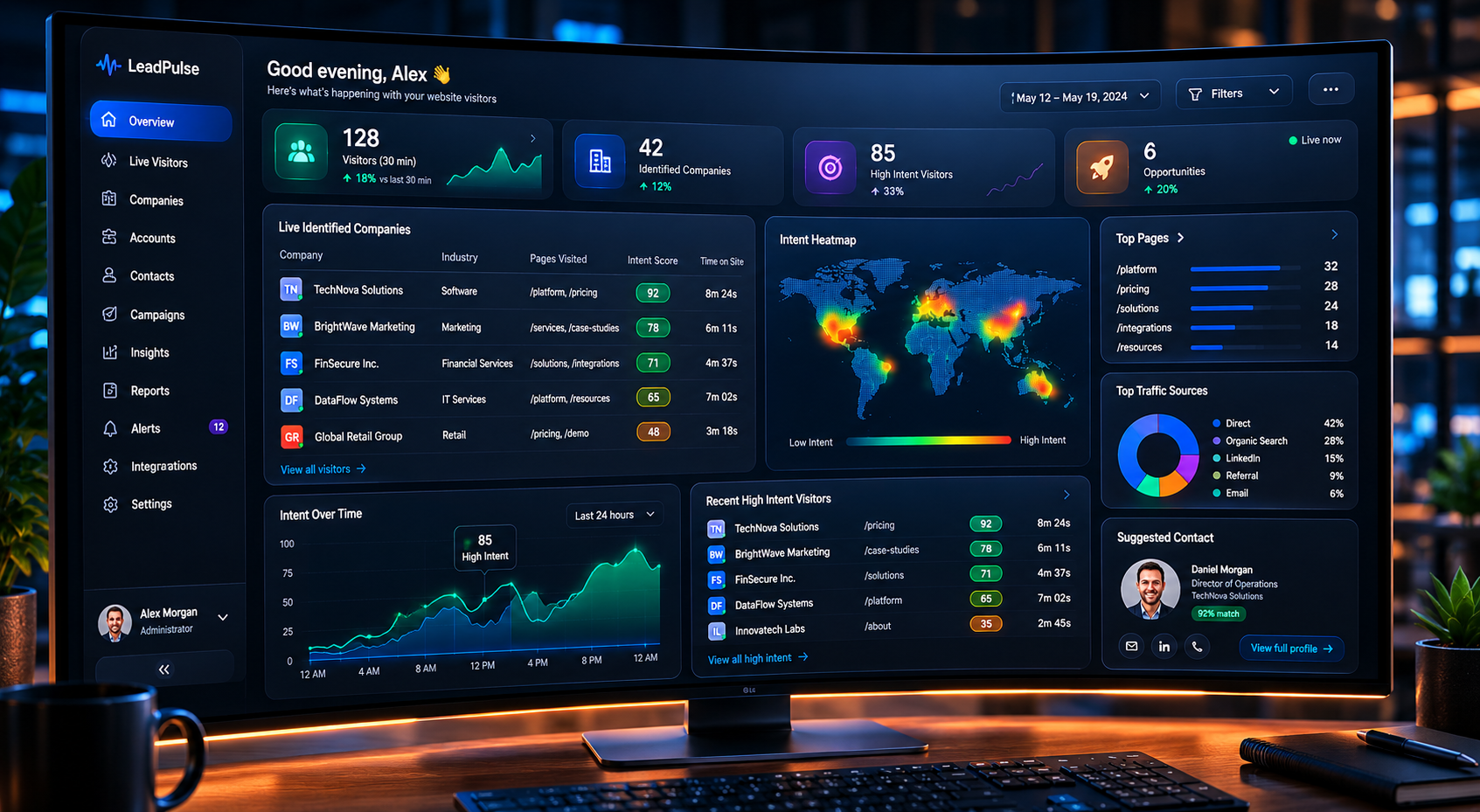
The ability to identify anonymous website visitors has moved from a specialist capability to a core component of modern B2B revenue strategy. Every session on your website is a potential signal from a buyer in motion. Whether you surface that signal or allow it to walk away unnoticed is a choice shaped entirely by the tools your team has access to.
With website visitor identification software in place, your sales team stops waiting for inbound enquiries and starts engaging warm prospects at precisely the right moment. Your marketing team gains the account level data needed to run precise, measurable campaigns. And your business stops losing pipeline it never knew existed.
Ready to find out who is visiting your website today?