Are you pouring thousands of dollars into marketing campaigns but still staring at an empty sales pipeline? You are certainly not alone. Many marketing teams struggle to strike the perfect balance between building b2b lead demand and executing tactical lead generation. We are going to break down the exact differences between generating broad market awareness and capturing direct interest. By the end of this guide, you will know exactly how to build a unified revenue engine that actually converts.
Decoding B2B Lead Demand vs Lead Generation

In the highly competitive modern marketing landscape, the debate between building b2b lead demand and driving direct lead generation is louder than ever. Marketers often treat these concepts as entirely separate disciplines, forcing companies to choose one over the other. However, relying on just one strategy is the fastest way to stall your business growth.
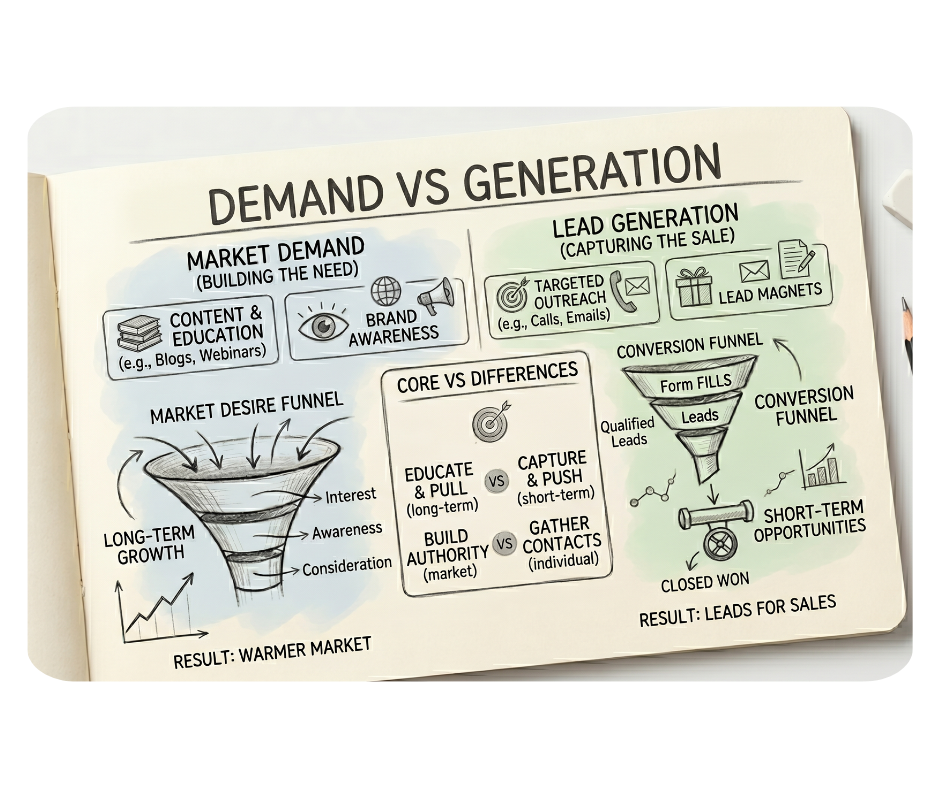
Demand generation focuses on creating a genuine need for your product within the broader market. It educates your audience, builds immense brand authority, and ensures your company is top-of-mind when the buying window finally opens. Think of it as planting the seeds for future revenue.
Lead generation, on the other hand, is the tactical process of capturing the contact information of interested prospects. It transforms anonymous interest into a concrete, actionable database for your sales team. This is the act of harvesting the crop you have carefully grown.
The Core Differences Explained
To truly accelerate your pipeline, you must deeply understand how these two vital functions operate differently. They serve completely distinct purposes within the modern buyer's journey.
- Ultimate Goal: Demand generation creates awareness, trust, and market authority. Lead generation captures actionable contact data for direct outreach.
- Metric of Success: Demand generation measures engagement, organic traffic, and brand reach. Lead generation measures form fills, targeted lists, and cost per acquisition.
- Content Type: Demand generation utilizes free, ungated content like podcasts, broad industry blogs, and social media videos. Lead generation relies on highly targeted, gated assets like webinars, whitepapers, and exclusive tools.
The Danger of Siloed Strategies
Focusing solely on lead generation without building demand leads to exhausting your addressable market. You end up continuously harassing cold prospects who have absolutely no idea who you are or what problems you solve. Consequently, your conversion rates plummet, and your sales team burns out from constant rejection.
Conversely, generating massive demand without a capture mechanism is just expensive vanity marketing. If you cannot identify who is consuming your content, you cannot proactively sell to them when their intent peaks. You need a seamless bridge between the two strategies to ensure marketing dollars translate into closed-won deals.
Bridging the Gap with Dynamic Leads

This is exactly where innovative intent data technology changes the game for B2B organizations. You no longer have to guess if your demand generation efforts are actually driving highly qualified traffic. The "dark funnel" of anonymous research is finally illuminated.
By leveraging Dynamic Leads, you can actively uncover the invisible companies engaging with your brand awareness campaigns. When a prospect consumes your demand-focused content and visits your site, you capture their intent data instantly.
- Reveal Anonymous Traffic: See exactly which target accounts are browsing your pricing pages after listening to your industry podcast.
- Prioritize Outreach: Arm your sales team with actionable insights, turning a broad demand signal into a hot lead generation opportunity.
- Accelerate the Pipeline: Reach out to interested decision-makers while your brand is still fresh in their minds, drastically reducing your sales cycle.
Conclusion
The most successful B2B companies do not choose between demand and lead generation. They use demand generation to spark interest and educate the market, while utilizing advanced lead generation tactics to capture the resulting intent. By seamlessly integrating these strategies with the right tracking tools, you create a sustainable, highly profitable growth engine.
Frequently Asked Questions
Q: Which strategy should a brand new startup focus on first?
A: Startups should initially lean heavily into demand generation to establish market presence and credibility, quickly layering in lead generation to capture the interest they create.
Q: Does gated content still work for lead generation today?
A: Yes, but only if the content is highly exclusive and actionable. Generic ebooks no longer warrant giving up an email address in the modern privacy-first landscape.
Q: How does website visitor tracking fit into this ecosystem?
A: Visitor tracking tools act as the ultimate bridge between the two strategies. They turn anonymous demand generation traffic into identified lead generation targets without requiring a form fill.
Ready to stop guessing and start converting?
Stop letting your hard-earned website traffic disappear into the void. Transform your anonymous visitors into qualified pipeline today. Contact us for a free Dynamic Leads consultation and see exactly who is ready to buy!